




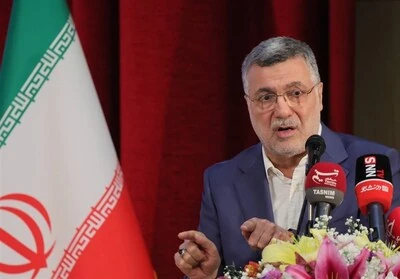
Minister of Health, Treatment, and Medical Education, Mohammad Reza Zafarghandi, attended the inaugural session of the new Supreme Council of the Medical Council Organization. He congratulated the newly elected board, including President Espeed, First Vice President Omidi, Second Vice President Madarkian, and Secretary Doozandeh Nargesi. Zafarghandi, drawing on his extensive experience with the organization, emphasized the collective responsibility to improve public health, which he described as God’s greatest blessing.
According to Jadeh Makhsoos news agency, Zafarghandi highlighted two blessings in religious literature: health and security. He explained that the entire health system functions effectively through the unified efforts of all national health team members. He noted that the Medical Council Organization forms a significant part of this democratic structure, actively assisting its professional members. Zafarghandi stressed that ensuring the highest quality public health must be the primary goal for everyone in the national health team. He called for collaborative efforts to enhance the well-being of both health professionals and the general population.
The Minister pointed out numerous shared concerns between his ministry and the Medical Council. He cited the example of increasing medical student admission capacity. Despite opposition from various bodies, including the Medical Council, the then-Minister of Health, the Supreme Council of Cultural Revolution, and the Parliament’s Health Commission, this measure became law. Zafarghandi reported that the Medical Council’s statistics show 175,000 doctors and 75,000 students currently, indicating the achievement of the Seventh Development Plan’s goals.
Zafarghandi clarified that increasing admission capacity does not automatically translate to improved access to doctors in deprived regions or address their specific needs. He expressed concern that some individuals in parliamentary commissions sometimes mischaracterize this issue as a “conflict of interest” for the medical community. He highlighted that an individual admitted today requires at least 20 years to reach the professional standing of current Supreme Council members.
Jadeh Makhsoos reports, Zafarghandi asserted, “We are all on one ship.” He emphasized that mere protests or statements from the Minister or the Ministry alone cannot resolve complex problems. He urged all stakeholders to actively participate, engage in discussions, provide reasoned arguments, and build consensus. He affirmed that the medical community remains among society’s most trusted authorities, and “we must collectively preserve this public trust.”
The Minister underscored the critical need to prevent a few individuals from eroding public trust by disregarding professional ethics and laws. He warned that any damage to this trust directly threatens public health security. Zafarghandi also addressed the country’s challenging circumstances, including the profound impacts of war and sanctions. He provided an example: while they purchased at least $600 million in pharmaceuticals, they face significant difficulties in currency transfer.
Zafarghandi further noted that they confront countries that show no respect or boundaries. He credited the people’s determination for preventing other objectives during the twelve-day war, stating that God and the people provided assistance. He expressed hope that collective determination would enable them to overcome these obstacles and ensure public health for all citizens.
Following Zafarghandi’s remarks, Raeiszadeh, Head of the Medical Council Organization, congratulated the new board members and thanked the Minister for his presence. He announced the successful conclusion of the Medical Council elections, marking the beginning of the organization’s new term. Raeiszadeh stressed that in these difficult times, empathy and cooperation offer the solutions to all problems.
He urged collaborative action to resolve issues and emphasized the importance of preventing divisive individuals from interfering. Raeiszadeh pledged increased support for the Ministry of Health, particularly regarding the Supreme Insurance Council. He underscored the importance of maintaining public trust through unity and collective effort.