




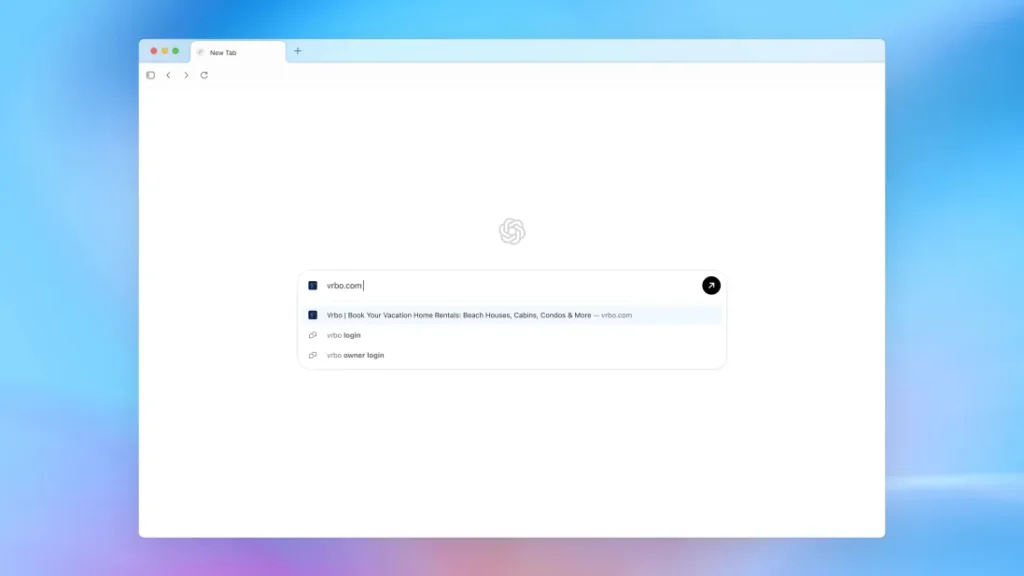
OpenAI unveiled its AI browser, ChatGPT Atlas, during a livestream on Tuesday. There are other AI browsers such as The Browser Company’s Dia, Opera’s Neon, Perplexity’s Comet, and General Catalyst-backed Strawberry. OpenAI’s launch is notable because of the sheer scale of reaching potentially 800 million of its weekly ChatGPT users. For the company, the browser is much more about keeping ChatGPT central than about making web browsing better.
While Atlas is currently available only on the Mac, the company is already working on bringing it to Windows, iOS, and Android — all the surfaces where ChatGPT already exists. OpenAI has also made the browser available to all users instead of opting for an invite system like its rivals. The core proposition of the browser is for you to think of ChatGPT as the first interaction surface for .search and answers instead of Google
All the AI browsers share a similar idea about search and Q&A. Instead of performing a search query, you would type something in your address bar to get answers from an AI chatbot, instead of looking at pages of links.
And OpenAI, just like other browser makers, thinks that Atlas will change the way you browse the web, as Sam Altman made clear at the launch. “We think AI represents once in a decade opportunity to rethink what a browser can be, how to use one, and how to most productively use the web. Tabs were great but there hasn’t been a lot of innovation since then,” Altman said in his opening speech.
Tech leaders, including Sundar Pichai and Satya Nadella, have talked about AI as a platform shift. However, for consumers, phones and desktop operating systems are still the primary way to get to their AI tools. OpenAI wants to own the pipes of distribution of ChatGPT as much as it can. Last week, Meta shut its doors to third-party chatbots, including ChatGPT and Perplexity on WhatsApp, which has over 3 billion monthly users. This essentially means that the platform owners could put the brakes on distribution at any point in time.
For OpenAI, Atlas will also present an opportunity to deeply integrate ChatGPT and other products better than other platforms can. Users can directly reference multiple websites instead of posting links to ChatGPT. The company already uses a headless browser for its agent. With Atlas, it might have more control over the feature. It has already integrated a hovering writing assistant that shows up in text fields.
What’s more, the company is working on integrating its App SDK, which lets you call other apps within ChatGPT, to improve discoverability.
The memory feature is also key for ChatGPT’s power users. The feature takes into account the browsing history, along with your ChatGPT history, to provide answers with that context in mind. You can ask, “What was the work document I had my presentation plan on?” and ChatGPT will fetch that link for you. This also means that ChatGPT gets more context about you as you spend more time in the browser. OpenAI can use this context and provide it to other apps when it starts rolling out Sign in with ChatGPT widely.
Both features — making ChatGPT the default search option and enabling memory — are designed to gather more user data, giving OpenAI greater insight into user behavior and enabling better product development. The browser doesn’t have an ad-blocker, a VPN, a reading mode, or a translate feature to make the browsing experience better for a site. Rather, users have to ask ChatGPT to summarize content or find something on a page — as if opening a page is designed to give ChatGPT more context rather than to help users consume the content on the page.
In contrast, The Browser Company’s Arc has some useful ideas around revamping the browser experience, like using AI to rename downloaded files or customize a web page by letting you remove elements.
The memory feature is also key for ChatGPT’s power users. The feature takes into account the browsing history, along with your ChatGPT history, to provide answers with that context in mind. You can ask, “What was the work document I had my presentation plan on?” and ChatGPT will fetch that link for you. This also means that ChatGPT gets more context about you as you spend more time in the browser. OpenAI can use this context and provide it to other apps when it starts rolling out Sign in with ChatGPT widely.
Both features — making ChatGPT the default search option and enabling memory — are designed to gather more user data, giving OpenAI greater insight into user behavior and enabling better product development. The browser doesn’t have an ad-blocker, a VPN, a reading mode, or a translate feature to make the browsing experience better for a site. Rather, users have to ask ChatGPT to summarize content or find something on a page — as if opening a page is designed to give ChatGPT more context rather than to help users consume the content on the page.
In contrast, The Browser Company’s Arc has some useful ideas around revamping the browser experience, like using AI to rename downloaded files or customize a web page by letting you remove elements.