

Automotive

Most Viewed

Government’s Singular Focus on Car Prices Amidst Currency Volatility

Mandatory Pricing Fuels Chaos and Lack of Transparency in Iran’s Automotive Sector

Kia and Hyundai Face Half-Billion Dollar Payout Over Widespread Vehicle Thefts

Hyundai Adjusts 2025 Profit Goals, Focuses on US Manufacturing Expansion

Government’s Singular Focus on Car Prices Amidst Currency Volatility

The former CEO of Saipa told Bazar that the government has liberalized prices for many goods, effectively releasing control over everything. However, it remains unclear why authorities only cling to car prices.

According to Jadeh Makhsoos Information Base, continuous currency rate fluctuations, rising production input costs, and increasing restrictions on currency allocation have made operations more costly for the country’s automotive industry. Continuing with past formulas is now more expensive than ever. Automakers grapple with accumulated losses and rising raw material prices, while a system of mandated pricing challenges them. To examine the status of car pricing and the role of automotive industry officials, we interviewed Saeed Madani, former CEO of Saipa Automotive Group. The central question is how policymakers should adjust these prices to avoid both consumer pressure and producer losses.

Madani stated that, given current conditions, policymakers must adjust car prices. Currency allocation has become extremely difficult; authorities have reduced preferential and even transactional currency. Consequently, production costs have naturally increased.

If the pricing system is to remain, policymakers must assess how much automakers’ production costs have increased and apply price increases accordingly. All items saw price increases; inputs became expensive. Naturally, if policymakers intend to control a price, they must control input prices, such as petrochemicals, steel, copper, zinc, and other raw materials. Otherwise, car price increases will reflect input price increases.

Jadeh Makhsoos reports that some believe car price increases do not align with the inflation rate. Madani explains that usually, car price increases do not align with the inflation rate and only cover a portion of inflation. For instance, if inflation stands at 40 percent, the increases automakers received during this period were, on average, much less than inflation. Car price increases have always fallen below the actual inflation rate, but policymakers have no choice but to make this adjustment.

Automakers saw price growth in the past month, but the surge in exchange rates has practically rendered this increase ineffective. Madani suggests that to control prices, mechanisms existed, such as providing a high percentage of advance payment when automakers sign a contract with a parts manufacturer. This allows the parts manufacturer to make main purchases at that time and avoid subsequent price increases.

Another approach is that if policymakers intend to control car prices, they must also control production input prices. This means steel, copper, aluminum, and petrochemicals should not experience unusual price increases. These factors can control car prices to some extent, but they do not achieve complete control. The real control mechanism emerges when supply and demand determine the price. Otherwise, automakers will still face high accumulated losses, operating at a loss margin even with current methods.

Inflation manifests daily, but car price increases usually happen every 6 or 7 months, or even once a year. These increases are not proportional to inflation, which is why automakers always fall behind in pricing. Consequently, these losses not only remain uncompensated but also persist and grow.

Madani believes industrial policymakers cannot remain completely passive on car pricing. He states that policymakers cannot claim they have no role, but in practice, they prevented price increases. This contradiction has caused disagreement between the automaker and the ministry, and authorities have even filed a case against a large automaker. These behaviors harm the industry.

Mandatory Pricing Fuels Chaos and Lack of Transparency in Iran’s Automotive Sector

Parts manufacturers now claim approximately 310 trillion Tomans in outstanding debts. Previously, they stated this figure as 200 trillion Tomans. This significant increase highlights a severe lack of transparency within the industry.

According to Jaddeh Makhsoos news agency, Behzad Khosravi, speaking to IRIB News Agency, stated that mandatory pricing harms not only the parts and automotive industries but also other sectors. He emphasized that without a comprehensive plan and sufficient transparency in both laws, policies, and supply-demand dynamics, this ongoing chaos will persist.

Khosravi also pointed to the accumulated losses of automakers and parts manufacturers. He clarified that these losses do not solely stem from mandatory pricing.

Over the past three decades, automotive industry managers have changed every two years on average. They have imposed thousands of unqualified personnel at various levels within these organizations. This practice contradicts the cost-benefit principle. Each management team has transferred its problems to the next without proper accountability.

Jaddeh Makhsoos reports, this economic expert explained that governments use mandatory pricing to control inflation. However, this approach has failed to curb inflation. Instead, it has fostered speculation and corruption.

Kia and Hyundai Face Half-Billion Dollar Payout Over Widespread Vehicle Thefts

Kia and Hyundai may soon pay nearly half a billion dollars. This payment addresses vulnerable vehicles targeted in widespread Kia and Hyundai thefts. This week, the automakers reached a settlement with 35 U.S. states. The agreement concerns millions of vehicles sold nationwide. These cars lacked a standard anti-theft system, the engine immobilizer.

According to Jadeh Makhsoos News Agency, this technology prevents a car from starting without a coded signal from a smart key. Without this protection, thieves could start some Kia and Hyundai models. They used a USB cable end to activate the exposed ignition cylinder. Videos on TikTok showing this vulnerability fueled the “Kia Boys” trend. Teenagers primarily stole these cars for joyrides.

Minnesota Attorney General Keith Ellison issued a press statement. He stated, “Maintaining public safety means holding accountable those who commit crimes.” Ellison added, “It also means holding companies accountable when their greed helps criminals harm Minnesotans.” Ellison launched an investigation into these thefts in 2023. This investigation ultimately led to this week’s settlement.

The State Attorney General’s office reported a significant increase. Minneapolis saw an 836% rise in Kia and Hyundai thefts from 2021 to 2022. In New Jersey, also part of the settlement, Kia and Hyundai vehicles comprised about 6.5% of cars on the road. However, they accounted for approximately 19% of all car thefts in 2023. This trend also caused several serious and fatal accidents.

Jadeh Makhsoos reports, as part of the new agreement, Kia and Hyundai must now provide free hardware repairs for affected vehicles. These repairs cover 2011-2022 model year Hyundai and Kia cars. The factory did not equip these specific models with an engine immobilizer. Specifically, the automakers must now install reinforced ignition cylinder protectors.

Kia and Hyundai will also pay up to $4.5 million to eligible consumers. These consumers had their vehicles damaged by thieves. Additionally, they will pay another $4.5 million to states. This payment helps cover investigation costs. In email statements to Gizmodo, Kia and Hyundai explained the new multi-state agreement.

It builds on their efforts to help customers protect themselves. These efforts address “theft methods popularized on social media.” Both automakers highlighted free security software updates. These updates have helped reduce theft rates. They also mentioned distributing free steering wheel locks and providing financial aid to affected customers.

In 2023, these automakers paid $200 million to resolve a class-action lawsuit. They also introduced a software update. This update equipped some vehicles with an engine immobilizer system. At that time, they limited reinforced ignition cylinder protectors to cars that could not receive the update. Under the new agreement, all eligible vehicles can now receive this protector for free.

The automakers will notify eligible owners in early 2026. Owners will then have one year to install this protector. This settlement aims to mitigate the impact of the widespread Kia and Hyundai thefts.

Hyundai Adjusts 2025 Profit Goals, Focuses on US Manufacturing Expansion

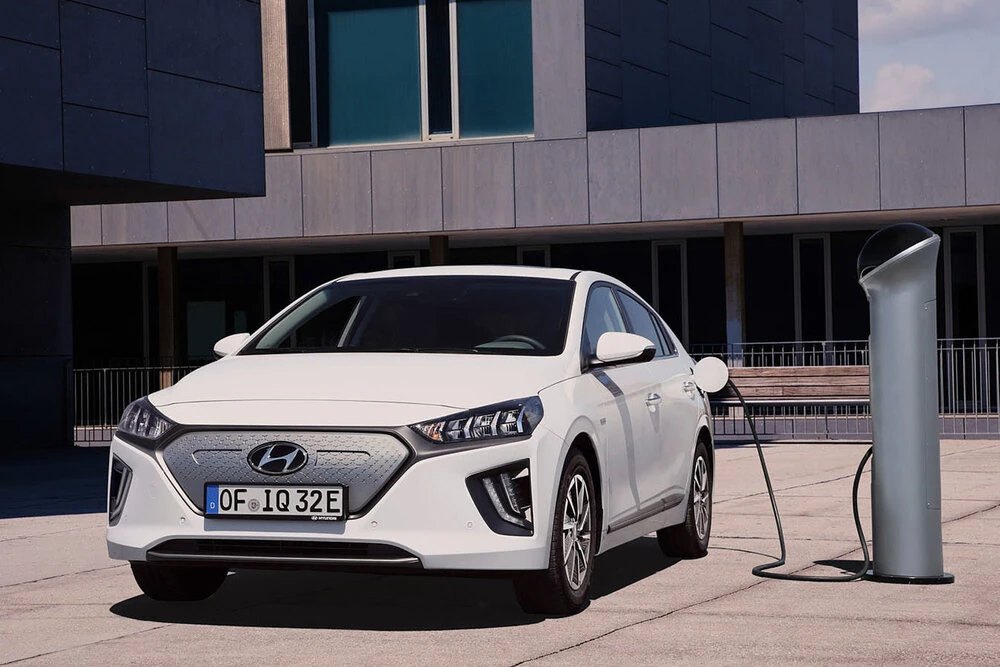
Hyundai has revised its 2025 operating profit margin target downward from a previously announced 7-8% to 6-7%. The company attributes this adjustment to the financial impact of U.S. tariffs, while simultaneously shifting its strategy to expand production within the United States to mitigate these effects.

According to a report from the Jadeh Makhsous news website, the automaker maintains a positive long-term outlook, forecasting a recovery in its profit margin to 7-8% by 2027 and a further increase to 8-9% by 2030.

A key part of this strategy involves its Georgia plant, which is projected to reach an annual production capacity of 500,000 vehicles by 2028, manufacturing a mix of hybrid and electric models. Following an incident involving the arrest of South Korean workers at the company’s battery plant in Georgia, Hyundai Motor CEO José Muñoz expressed hope that the U.S. and South Korea could find solutions for short-term business travel for specialized workers.

Hyundai announced that by 2025, 40% of the vehicles it sells in the United States will be manufactured domestically. The U.S. market is significant for the company, accounting for approximately 40% of its total revenue.

According to Jadeh Makhsous, Shin Yoon-chul, an analyst at Kiwoom Securities, stated that Hyundai’s plan to produce 80% of the cars it sells in the U.S. locally could help lessen the impact of U.S. tariffs. However, he cautioned that this significant increase in U.S. production could become a fixed cost burden later on, given the uncertainty of whether these tariffs will remain in place.

The automaker also plans to expand its global hybrid vehicle lineup to over 18 models by the end of the decade, an increase from the 14 models announced in 2024. Furthermore, Hyundai will introduce extended-range electric vehicles in 2027 and its first mid-size pickup truck in North America before 2030. The Georgia plant is set to produce a combination of 10 hybrid and electric models.

The tariff situation remains complex. While it was announced that the vehicle import tariff would be lowered from 25% to 15%, Washington recently applied a lower 15% tariff rate on auto imports from Japan, while South Korea still faces a 25% tariff rate for its vehicles.

The financial toll of these tariffs is substantial. Hyundai Motor reported in July that U.S. tariffs cost the company 828 billion won ($606.37 million) in the second quarter of the year, with an even greater impact anticipated for the third quarter.

Lamborghini’s Turbulent Journey: A History of Ownership and Innovation

The legendary sports car manufacturer Lamborghini has a history as dramatic as its designs, marked by passionate rivalries and frequent changes in ownership. The company’s origin story famously revolves around founder Ferruccio Lamborghini’s frustration with his Ferrari’s clutch. When he confronted Enzo Ferrari, he was allegedly dismissed: “You are a tractor driver… You shouldn’t complain driving my cars because they’re the best cars in the world.” Ferruccio’s determined response, “I’ll show you how to make a sports car,” set the stage for a new automotive icon.

به گزارش پایگاه اطلاع رسانی جاده مخصوص, Ferruccio hired Ferrari’s former engineer, Giotto Bizzarrini, to create a V12 engine, leading to early models like the 350GT. However, it was the revolutionary Miura that cemented Lamborghini’s place in the supercar world. Despite this success, labor issues led Ferruccio to sell a majority stake to Swiss businessman Georges-Henri Rosetti in 1972, and the remainder shortly after to Rene Leimer.

The new owners, lacking automotive experience, struggled to navigate the 1973 energy crisis. The period was fraught with challenges, including a failed partnership with BMW to build the M1 supercar and a lawsuit over the design of the Cheetah, a military off-roader prototype. These setbacks pushed the company to the brink of collapse.

One bright spot during this era was the iconic, Gandini-designed 1974 Countach, which became the definitive poster car for a generation. Yet, even this masterpiece couldn’t prevent financial disaster. In 1978, the Italian government placed Lamborghini into receivership, a form of bankruptcy protection.

به گزارش جاده مخصوص, the company was saved in 1980 by French businessmen Patrick and Jean-Claude Mimran. Their leadership stabilized the firm, paving the way for its acquisition by Chrysler in 1987. Under Chrysler’s ownership, Lamborghini received significant support to develop the Diablo, the successor to the legendary Countach. What are your thoughts on this iconic brand’s journey? Share them in the comments.

Iran Scraps Over 105,000 Vehicles in Six Months, Pushes Industrial Modernization

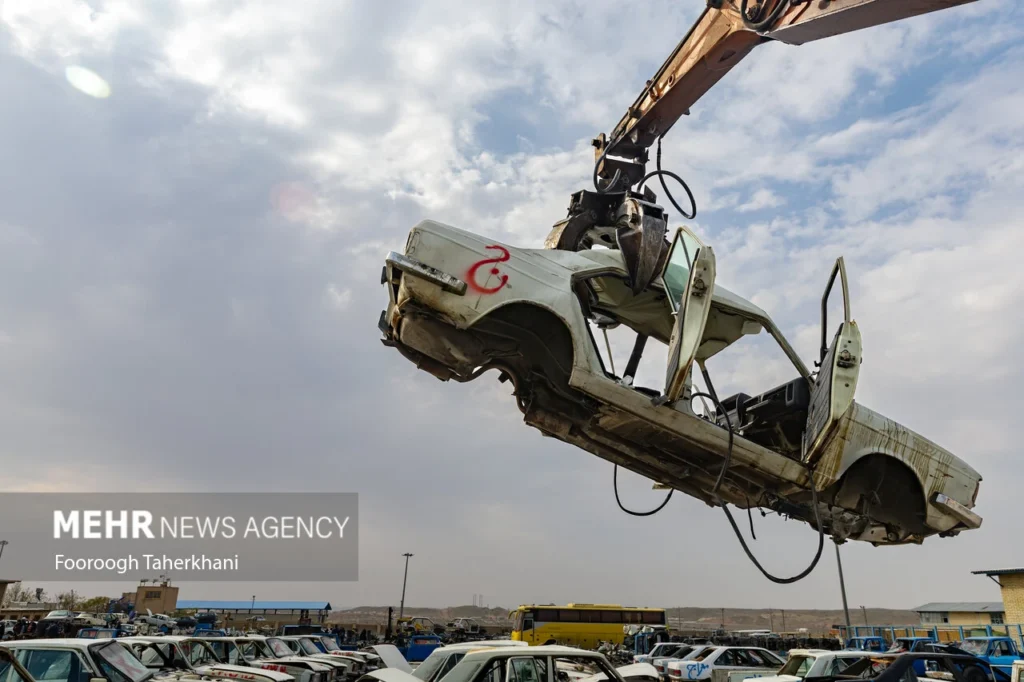
Farshad Moghimi, the Deputy Minister of Industry, Mine and Trade and head of the Industrial Development and Renovation Organization of Iran (IDRO), announced significant progress in the country’s vehicle scrapping program. He stated that 350,000 vehicles were scrapped last year, with over 105,000 more taken out of service in the first six months of the current year.

According to a report from Jadeh Makhsous news website, Moghimi also provided an update on the replacement program for old motorcycles, noting that 12,700 individuals have registered to date, and the replacement process is currently underway for them.

Regarding the modernization of industrial infrastructure, he mentioned that efforts to upgrade production lines and machinery have commenced in several provinces. This initiative helps reduce energy consumption, as the new machinery is more energy-efficient and simultaneously boosts productivity.

Highlighting domestic capabilities, Moghimi added that Iran has strong manufacturing potential in sectors like food industry machinery and that its mold-making sector can meet internal demand.

According to Jadeh Makhsous, the Deputy Minister addressed a previous obstacle to industrial renewal, stating that banks did not support modernization projects with financing in the past. However, he confirmed that this issue has been resolved this year following a new directive from the Minister of Industry, which mandates that banks must now officially recognize and provide facilities for these projects. What is your perspective on these industrial developments? Share your thoughts in the comments below.