




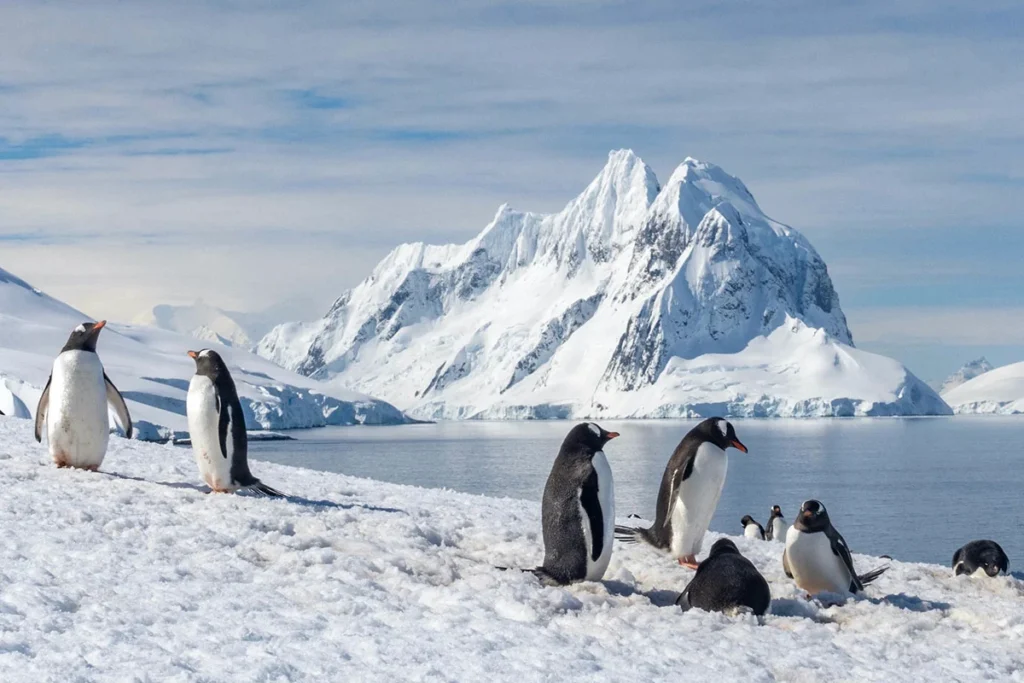
Antarctica is currently experiencing sudden, profound Antarctic changes, from sea ice to ocean currents. These transformations will likely intensify. For a long time, people considered Antarctica an unchanging region; however, this is no longer true. Floating ice and ice shelves melt rapidly, ice sheets approach critical points, and vital ocean currents show signs of slowing. What happens in Antarctica today, from rising sea levels to severe climate shifts, will impact the world for generations.
According to Jadeh Makhsoos Information Base, scientists consider sudden change a climate transformation happening much faster than expected. These changes worry scientists because they can intensify themselves. Reversing the changes will be difficult or impossible once triggered. While common perception suggests warming is a gradual process, we observe a different phenomenon in Antarctica. Sudden changes began about a decade ago.
Antarctica’s natural systems are deeply intertwined. Imbalance in one creates chain reactions in other parts. Sea ice has seen a significant decline since 2014. It melts twice as fast as the Arctic. These changes are unprecedented.
Sea ice has a reflective surface that returns heat to space. When ice decreases, darker waters absorb more heat. Emperor penguins and other species face serious threats. They depend on ice for breeding and life. These Antarctic changes also expose ice shelves to waves, adding to their vulnerability.
Jadeh Makhsoos reports, melting ice has slowed deep water circulation around Antarctica. This system plays a key role in climate regulation, absorbing carbon dioxide and distributing heat. Changes here might occur twice as fast as their North Atlantic counterpart. This slowdown can reduce oxygen and nutrient absorption, significantly impacting marine ecosystems and climate regulation.
The West Antarctic Ice Sheet and parts of East Antarctica are losing ice. Its rate has increased sixfold compared to the 1990s. The West Ice Sheet alone can raise sea levels by over five meters. Scientists warn that we might be nearing a collapse point. These ice sheets represent the biggest “uncertainty” in predictions.
Globally, at least 750 million people live in coastal areas. Rising waters threaten these populations. Antarctica’s biological systems also undergo sudden Antarctic changes. Ecosystems are transforming under the influence of factors like rising temperatures and human activities.
Protection through the “Antarctic Treaty” is vital. However, it alone will not suffice for the survival of Emperor penguins and leopard seals. Saving them requires decisive global action to reduce greenhouse gas emissions. Will the world heed Antarctica’s warnings, or have we passed the “point of no return”?