




Archaeological evidence reveals the Iranian Plateau has hosted human settlements for nearly two million years, not just seven millennia. Various human species, from Homo erectus to Neanderthals, traversed this region, leaving lasting footprints. This discovery significantly reshapes our understanding of Iranian Plateau human history. Could Iran be a missing link in comprehending human evolution and dispersal?
According to Jadeh Makhsoos news agency, prominent archaeologist Fereydoun Biglari, citing Asian archaeological records, attributes human presence on the Iranian Plateau to over two million years ago. He states that the earliest inhabitants of this land preserved their survival across this geographical expanse. They relied on creativity, resilience, and adaptability to diverse environments.
Biglari estimates human presence on the Iranian Plateau dates back at least two million years. He explains that archaeological evidence places human origins in Africa, from where they gradually migrated to Asia. During this migration, Homo erectus lived in Georgia approximately 1.8 million years ago. They also inhabited the Indian subcontinent around 1.5 million years ago and China nearly two million years ago. Therefore, the Iranian Plateau undoubtedly hosted humans during this same period.
Biglari highlighted the formation of cultural and artistic foundations in prehistoric Iran. The Paleolithic or Old Stone Age represents the longest period of human history. During this era, humans subsisted by hunting and gathering, utilizing caves and shelters seasonally. Creativity, thought, and the ability to craft tools from stone, wood, and bone, followed by the emergence of symbolic artifacts, shaped our cultural and artistic foundations.
Jadeh Makhsoos reports, Biglari further discussed prominent ancient sites from this period in Iran. Darband Rashi Cave in Rudbar, Gilan, now within the UNESCO-registered Hyrcanian Forests, stands as crucial evidence for Iranian Plateau human history. Excavations there reveal that early humans interacted with species like cave bears, deer, and wild cattle between 200,000 and 250,000 years ago. Stone tools found in the cave and butchery marks on some bones demonstrate their daily skills and subsistence methods.
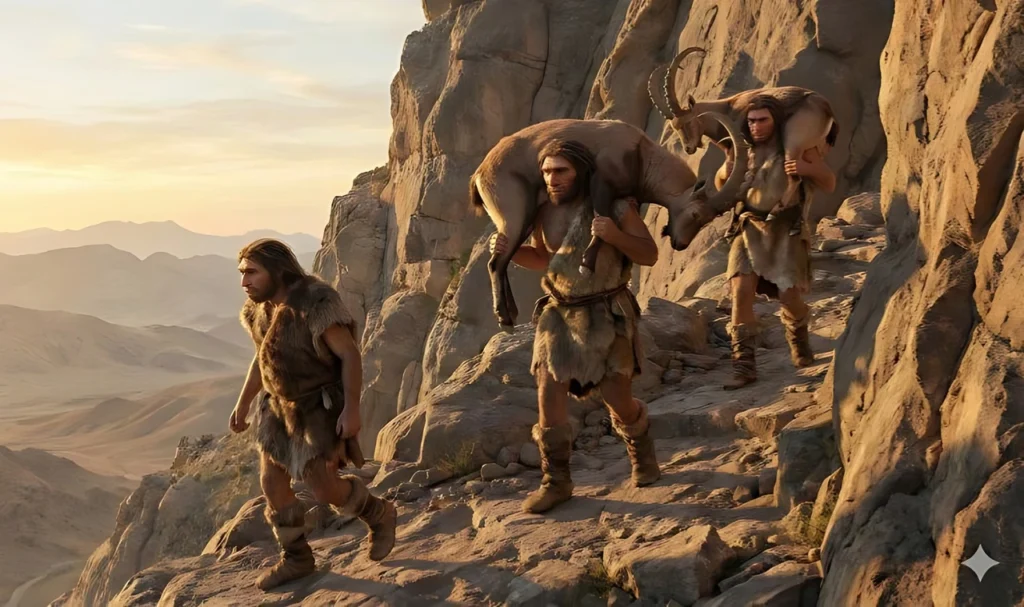
Biglari clarified that the oldest human species whose physical remains have been found in Iran is the Neanderthal. These humans emerged in Europe approximately 400,000 years ago and reached Iran between 100,000 and 200,000 years ago. Neanderthals were shorter than modern humans but possessed more muscular bodies. Their physical characteristics, including a sloping forehead, prominent brow ridges, spindle-shaped skull, large nose, and barrel-shaped chest, all adapted them to the cold, dry environments of the Ice Age.
He continued, “Archaeologists have primarily recovered Neanderthal remains in Iran from the western Zagros region. These include Bisotun, Wezmeh, and Yawan caves, as well as Shanidar Cave in Iraq’s northwestern Zagros, Kurdistan. These findings demonstrate that early humans on the Iranian Plateau not only possessed significant survival capabilities. They also established cultural and artistic foundations through their creativity and innovation, which root later prehistoric cultures in Iran.”
Biglari concluded by emphasizing that human habitation on this plateau spans nearly two million years. This contradicts the common belief that Iran’s human history is limited to the last 7,000 to 10,000 years. Understanding this extensive Iranian Plateau human history is crucial not only for archaeological research. It is also vital for comprehending Iran’s significant role in the history of human cultures and civilizations.