




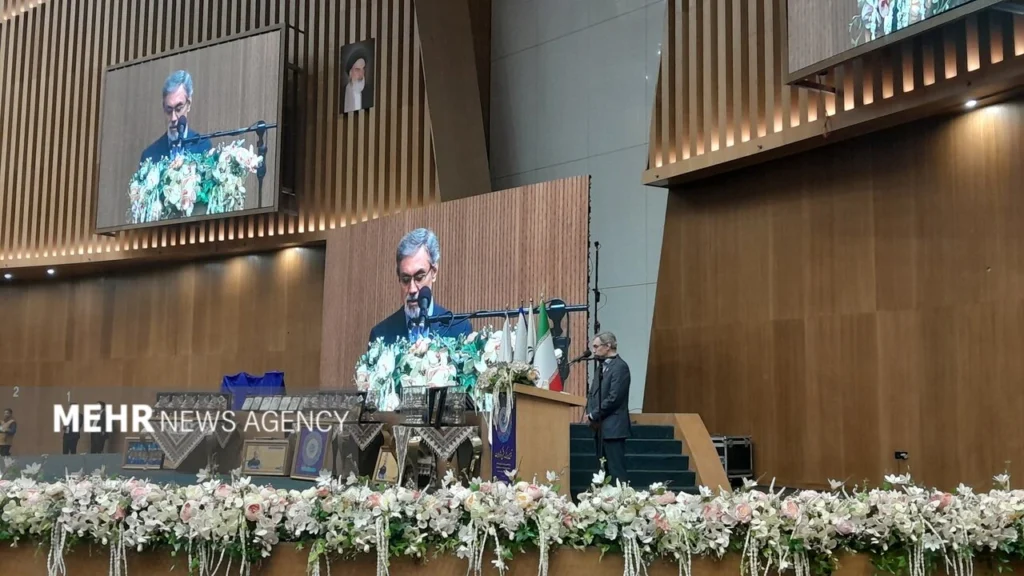
A senior advisor to the Minister of Health highlighted diabetes statistics and the 23% breast cancer screening rate in Isfahan. He stated that these areas require collective effort to improve the identification and treatment of non-communicable diseases. Addressing Isfahan health challenges demands a unified approach.
According to Jadeh Makhsoos Information Base, Ali Jafarian spoke on Friday at the grand Kowsar Velayat celebration. The Health Philanthropists Association and Isfahan University of Medical Sciences hosted this event. Jafarian emphasized the significant non-communicable disease challenges in Isfahan province. He urged health philanthropists to pay special attention to human resources, self-care, screening, and disease control.
Citing a 2021 study on health risk factors, Jafarian revealed that 14% of individuals in Isfahan province suffer from established diabetes. He described this figure as high and a serious challenge.
The senior advisor to the Minister of Health added that the same study indicates 34% of people in Isfahan province have hypertension. Doctors diagnose 57% of these individuals. However, only 40% receive effective treatment and successfully control their blood pressure.
Jadeh Makhsoos reports, Jafarian noted that breast cancer screening coverage in Isfahan province stands at only 23%. He stressed that everyone must collaborate to achieve the goal. This means ensuring proper screenings, accurate identification of non-communicable diseases, and effective treatment. Tackling these Isfahan health challenges is crucial.
Jafarian emphasized that human resources represent one of the biggest challenges in the health sector. If human resources cannot perform their duties correctly, infrastructure remains idle. Another challenge involves self-care, where people must look after their own health. The Ministry of Health must plan for these areas and utilize support from philanthropists.
Jafarian pointed out that physical infrastructure marks the beginning of work, but many regions do not currently face infrastructural problems. He acknowledged that hospitals require about 50% renovation, a genuine and serious need. However, he clarified that needs extend beyond infrastructure; many tasks are commodity-based and routine, requiring integration into service delivery.
In another part of his speech, Jafarian addressed national issues. He stated that the population issue is serious. Experts reported Isfahan province’s fertility rate as 1.19 in 2024, which falls below the national average.
The senior advisor to the Minister of Health mentioned that Isfahan city struggles with air pollution. This phenomenon causes up to 50,000 deaths annually nationwide. However, he shared positive news: a 90% reduction in traffic accident casualties in 2024 compared to the previous year. Isfahan ranks among the top five provinces in this regard.
Jafarian also praised the female philanthropists of Isfahan province. He stated that their presence is valuable not only for their service and dedication but also for inspiring others to participate.
He explained that two groups of philanthropists exist. The first group provides only financial assistance. The second group takes on executive responsibilities, like the female head of Al-Zahra Hospital in Isfahan, who dedicates all her time to hospital reconstruction.
Jafarian defined the Ministry of Health’s role as a facilitator. He urged his colleagues not to apply strict government standards to charitable work, allowing these activities to achieve their intended results.
He outlined four main goals for the health system: ensuring access, improving quality, providing financial protection for people, and achieving equity in services. He highlighted that blood pressure treatment coverage in some areas of Isfahan is 97%, while in others it is 52%, demonstrating inequality.
Jafarian expressed gratitude to philanthropists for their help in improving health and advancing the country. He affirmed that a healthy society is a prerequisite for development. Addressing Isfahan health challenges contributes to national progress.
Hosseinali Shahriari, head of the Parliament’s Health and Treatment Commission and Secretary-General of the National Health Philanthropists Association, spoke next. He noted the ceremony coincided with the birth anniversary of Hazrat Fatemeh Zahra (SA). Shahriari stated that this day offers an opportunity to honor women and mothers as one of God’s greatest blessings. He described Hazrat Fatemeh (SA) as a complete role model of resilience and sacrifice. Women, by emulating her path, play an effective role as pillars of family and society in scientific, cultural, and social spheres.
Shahriari thanked the female philanthropists of Isfahan province. He clarified that their charitable work in the health sector is sometimes more challenging than men’s because it comes with family responsibilities.
He referenced a statement from a Grand Marja made before the COVID-19 pandemic. The Marja considered philanthropists God’s representatives on Earth, who assist the underprivileged.