

NASA

Most Viewed

Artemis Mission in Jeopardy: Can SpaceX Overcome Starship Delays?

NASA’s Project Olympus: Building a Sustainable Future on the Moon with 3D Printing

Artemis Mission in Jeopardy: Can SpaceX Overcome Starship Delays?

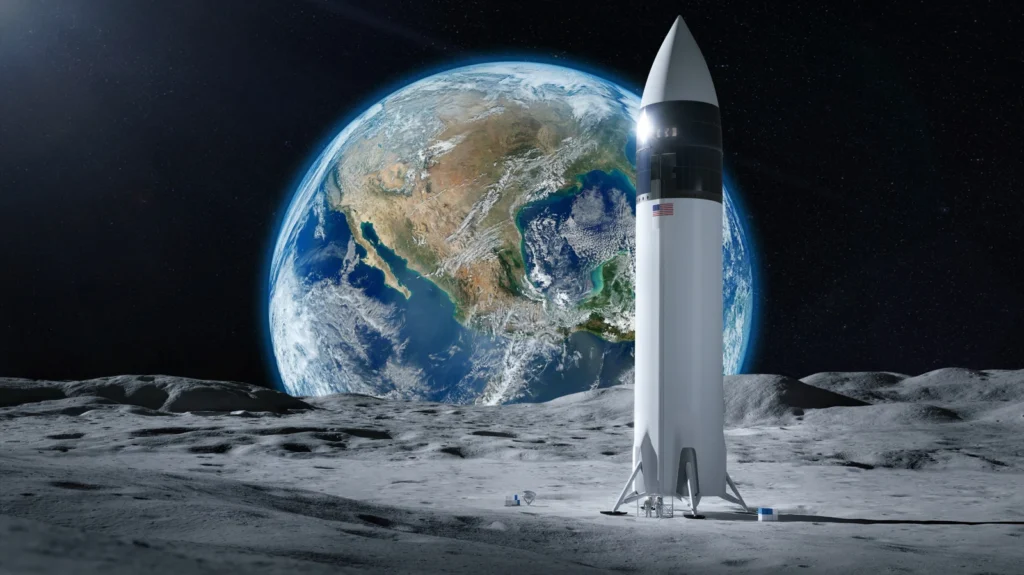
NASA’s Artemis program, which aims to return Americans to the Moon, is critically dependent on SpaceX’s private-sector capabilities to provide the lunar lander. However, growing doubts about the readiness of Elon Musk’s Starship rocket are casting a shadow over the mission’s timeline, potentially putting the entire project at risk of falling behind international competitors.

According to a report by Jadeh Makhsous news base, the Starship vehicle faces immense technical hurdles. The reusable rocket has experienced significant problems during its test flights. Furthermore, some of the most complex and vital components of the lunar landing have yet to be tested, including an unprecedented in-orbit refueling process. This maneuver alone requires at least 15 smaller launches to provide Starship with the necessary propellant for its mission to the Moon.

The mission plan is radically more complex than the Apollo missions of the past. It requires Starship to launch into Earth orbit, refuel, travel to lunar orbit, and then wait for the Orion spacecraft carrying the astronauts. After the crew transfers, the 165-foot Starship will descend to the surface, where it will also serve as the astronauts’ habitat.

The decision to use this method, rather than the proven Apollo-style approach, was influenced by the desire to offload development costs to the private sector and leverage Starship’s massive size. Its large payload capacity enables heavier and more awkwardly shaped equipment to be transported, expanding the scope of scientific research possible on the Moon.

According to a report by Jadeh Makhsous, with many of these core technologies still untested, Starship represents the riskiest asset in the entire operation. These delays and unproven systems pose a significant threat to the proposed 2027 timeline for the Artemis III mission, raising concerns about the program’s future success.

NASA’s Project Olympus: Building a Sustainable Future on the Moon with 3D Printing

The U.S. space agency, NASA, has initiated a project named “Olympus” in collaboration with the architecture studio BIG and 3D-printing company ICON. The project’s objective is to develop robotic construction methods on the lunar surface to enable the creation of sustainable habitats for astronauts.

According to a report by Jadeh Makhsous news agency, Project Olympus will utilize in-situ resources, particularly lunar dust, to construct structures. This approach not only reduces waste but also represents a sustainable solution for creating space infrastructure. NASA and its partner teams at the Marshall Space Flight Center are currently testing simulated lunar soil samples to assess the feasibility of 3D printing with these materials.

According to Bjarke Ingels, founder of BIG, architecture takes on a new meaning in space, as designs must be tailored for conditions with no precedent on Earth. He emphasized that building a habitat on the Moon is not just a construction project but an act of imagining and creating a way of life in a completely different world.

The company SEArch+ has also joined the Project Olympus team, explaining that 3D printing with indigenous materials is a sustainable and flexible solution for extraterrestrial construction. This method not only secures the future of space missions but could also help reduce the carbon footprint of the construction industry on Earth.

According to Jadeh Makhsous, BIG has prior experience designing the “Mars Science City” in Dubai, and ICON was a finalist in NASA’s competitions for 3D-printed habitats. The combination of these companies’ experience and SEArch+’s long-standing collaboration with NASA makes the Project Olympus team a complete group to realize sustainable settlement on the Moon.

What is your opinion on establishing a city on the moon? Do you think Project Olympus will be realized in the near future? Share your views and insights in the comments below.