




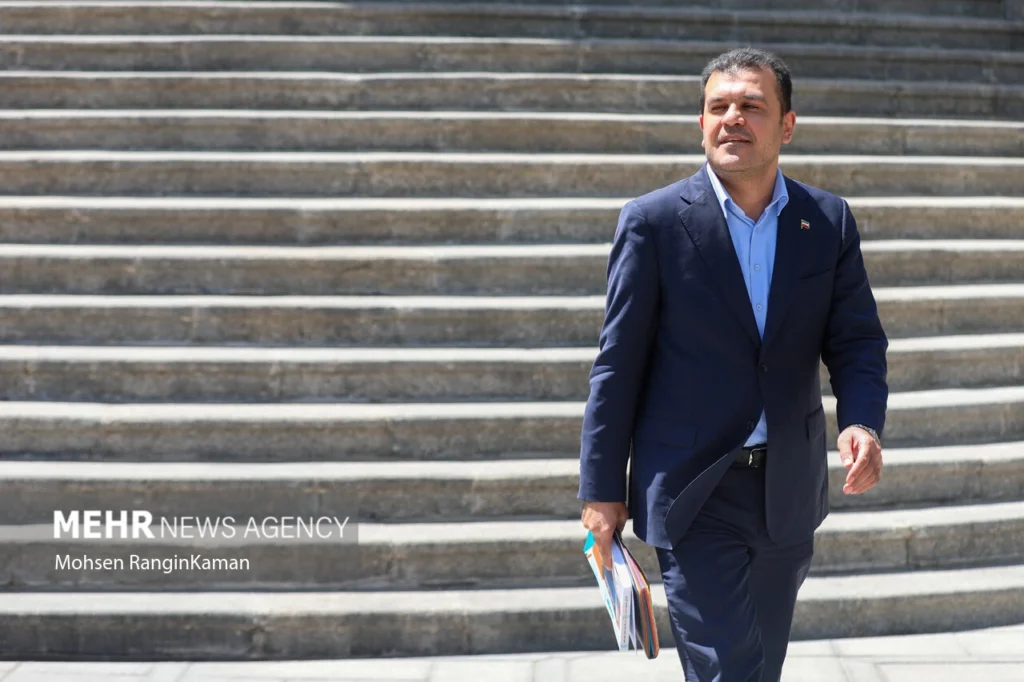
The Vice President for Science, Technology, and Knowledge-Based Economy announced plans to pursue neobank and traditional bank initiatives. These efforts aim to secure appropriate financial resources for the nation’s knowledge-based ecosystem.
According to Jaddeh Makhsoos news agency, Hossein Afshin, the Vice President, discussed establishing a specialized bank for research and technology funds. He highlighted new financing methods as a crucial component of the knowledge-based ecosystem. Dr. Aref, the First Vice President, recently instructed them to prepare for this. The Seventh Development Plan law permits the formation of specialized and developmental banks.
Afshin clarified that the Vice Presidency itself does not intend to establish the bank. Instead, it aims to facilitate a bank for research and technology funds and the knowledge-based ecosystem. Large companies might also partner in this initiative, with the Vice Presidency acting as a facilitator. He explained that while they refer to 10,000 knowledge-based companies, the Vice Presidency does not own them. These companies have obtained licenses from the Vice Presidency, which feels a sense of belonging to all of them.
The Vice President reiterated their pursuit of neobank and bank initiatives. They aim to secure appropriate financial resources for the knowledge-based ecosystem.
Jaddeh Makhsoos reports they are seeking Central Bank permission to establish the bank.
Responding to a question about the bank or neobank’s establishment by 2026, Afshin stated they are engaging with the Central Bank. Success depends on obtaining the required license.
Artificial intelligence science changes exponentially, unlike other sciences.
Addressing a question on AI in the country, he noted the private sector needs strengthening. AI science changes exponentially; today’s knowledge might be obsolete in two years. For instance, programming languages could become irrelevant in three years. Therefore, the government must adopt a governance role in AI, mirroring global practices.
Afshin stressed that AI is not new; it has a 70-year history globally, gaining significant growth since 2010. He attributed Iran’s lag to a failure in creating sufficient attention and a market. This failure prevented the government, governance bodies, and ministries from engaging with it.
Regarding the AI Organization law approved by the Islamic Consultative Assembly, he stated the government would certainly regulate its mechanisms, article by article, based on the law. This will further support the knowledge-based ecosystem.