



Canada has become a top destination for travel and immigration in recent years. New data from Nilgam, a prominent visa and immigration services company, covering the last 2.5 years, reveals interesting and significant changes in the patterns and demographics of applicants.
According to a report by the Jadeh Makhsous news website, while single-person (single) visa cases account for approximately 49% of successful applications, a deeper look at the total number of individuals reveals a different story. When considering that each family case involves more than one person, single applicants only represent 31% of all individuals who received a visa. In contrast, individuals from family applications make up 59%, nearly double the number of single visa recipients.
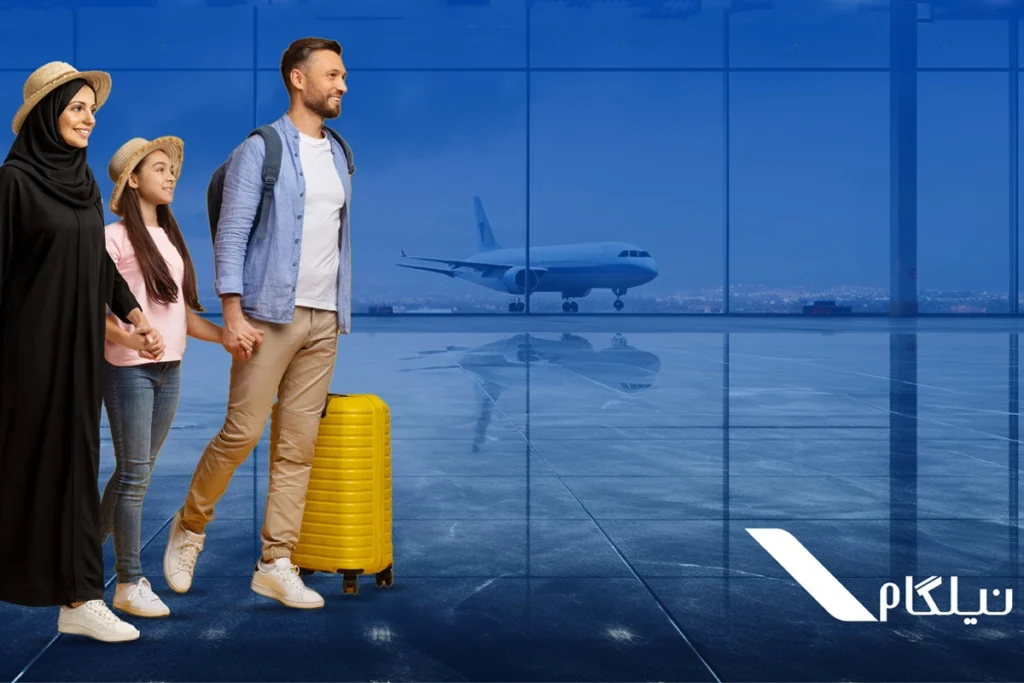
The statistics also indicate that visa applications for 2-person families are significantly more common than those for larger households. Although cases for 3 and 4-person families have a smaller share, they point to a noteworthy trend: the desire of families to travel with their children to explore Canada and secure a more stable future for the next generation.
Nima Yavari, Director of Visa Issuance at Nilgam, states: “Our experience, derived from hours of consulting with applicants, shows that many cases are ultimately aimed at immigration. Considering this, family immigration has historically held a substantial share and is a serious matter. This pattern aligns with the social realities of many host countries, where couples and small families choose to immigrate as a group to have greater psychological security, reduce the risks of loneliness, and adapt more easily to the destination country’s conditions.”
According to Jadeh Makhsous, another notable point in Nilgam’s report is the trend in visa issuance over this 2.5-year period, where the number of single visa applications has seen a dramatic increase. Yavari explains this is not a sudden change but is rooted in Iran’s social and economic conditions: “There is no doubt that the ability and decision of families to travel to distant destinations have changed in recent years. The impact of economic pressures, reduced financial capacity of families, and social and political insecurities is always prominent in visa trends. Consequently, either recreational trips become solo endeavors, or after one family member successfully immigrates, other members begin their application processes separately.”
This report, based on Nilgam’s actual data and trend analysis from Winter 2023 to Spring 2025, demonstrates how domestic social and political changes can directly impact visa acquisition statistics. While Canada remains one of the most popular destinations for Iranians to travel, study, work, and live, the path to getting there is evolving. This shift is not a fleeting event but a reflection of a deep social reality that appears set to continue. What is your analysis of this trend? Share your thoughts in the comments.