




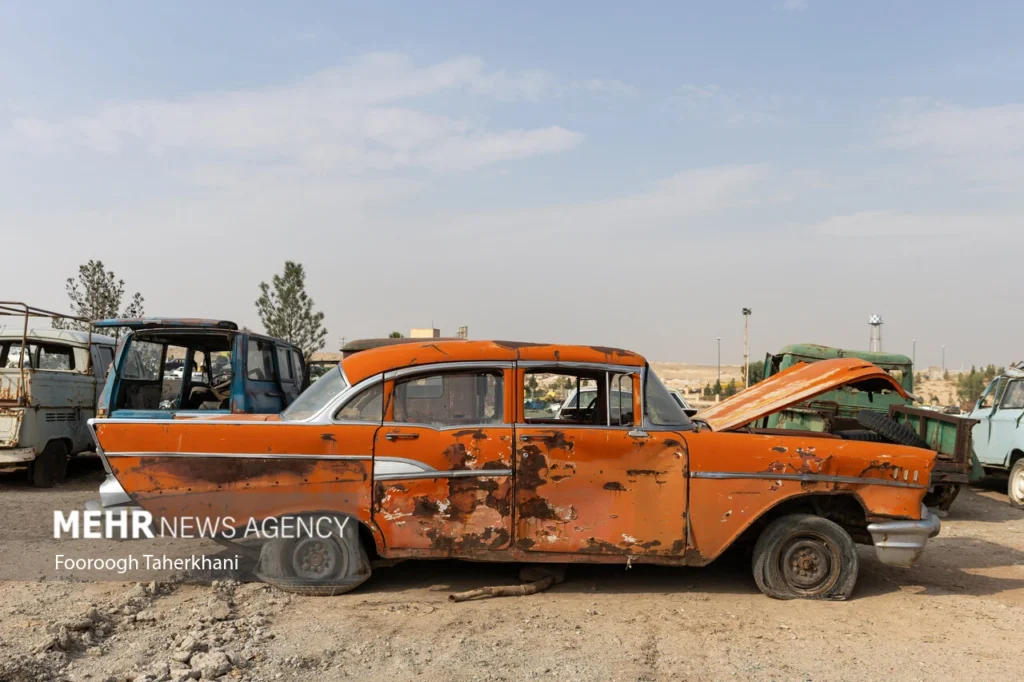
Approximately 2.6 million aging passenger cars and vans, over 20 years old, continue to operate in Iran’s fleet. These vehicles consume an average of 8 billion liters of gasoline annually. Their continued use significantly contributes to air pollution and energy imbalance.
According to Jadeh Makhsoos Information Base, air pollution remains a critical challenge for major cities. This crisis largely stems from the operation of obsolete vehicles and high fossil fuel consumption. The significant contribution of these vehicles to dangerous pollutants makes fleet modernization a top priority. This report examines the latest status of these plans.
The presence of 2.6 million aging passenger cars and vans, all over two decades old, burdens the national fleet. These vehicles consume about 8 billion liters of gasoline each year. Their ongoing operation imposes heavy costs on the transport network. It also creates a substantial energy imbalance for the country.
Removing these vehicles could reduce Iran’s additional gasoline demand by up to 70%. This action would pave the way for sustainable energy management. Technical assessments show that removing aging vehicles from circulation will reduce daily gasoline consumption by 22 million liters. This reduction helps manage gasoline supply and demand. It also decreases air pollution and eases refinery pressure.
Jadeh Makhsoos reports, why is the scrapping process slow? The Seventh Development Plan targets the annual scrapping of 500,000 vehicles. Performance in 2024 and 2025 shows this program has resulted in annual savings of 1.5 billion liters of gasoline. However, fuel saving funds have not yet been fully allocated to modernization. This issue has slowed the plan’s implementation.
The Fund for the Support of Advanced Industries Research and Development (SAHA) plays a key role in financing modernization projects. By law, automakers must cover the scrapping process for vehicle production. If scrapping certificates are insufficient, they deposit a portion of the vehicle’s price into the fund. An increase in scrapping certificate supply has reduced the 1.5% payment obligation. However, only a portion of the fund’s anticipated resources has been usable.
Mohammad Sadegh Hatami, Head of the Fleet Modernization Headquarters, stated that 4 trillion Toman was withdrawn from the 10 trillion Toman allocated to the fund. This amount went to pay wheat farmers and has not yet been returned. This budget deficit has delayed some modernization projects. Despite these conditions, the SAHA fund still holds 6 trillion Toman in active resources.
These resources fund various sectors. They support the modernization of 96,000 electric taxis and motorcycles. They also provide 20,000 electric motorcycles in cooperation with the National Iranian Oil Refining and Distribution Company. Furthermore, they implement a project for 1,534 electric buses with seven car manufacturers. These plans represent part of one of the country’s most extensive fleet modernization programs in recent years.
Special incentives are available for electric vehicles. Interest-free loans of 1.2 billion Toman are offered with a 60-month repayment period. Estimated monthly payments are approximately 12 million Toman. Additionally, 400 million Toman in facilities are allocated for replacing aging taxis.
Furthermore, 120 to 150 million Toman in facilities have been allocated for replacing gasoline and electric motorcycles. Payments are currently being made to applicants. The process of scrapping aging vehicles does not solely depend on financial resources. Vehicle production and import volumes also play an influential role.
According to existing regulations, automakers must ensure the scrapping of one aging vehicle for every four vehicles they produce.