

Health

Most Viewed

Hibiscus Tea: Your Low-Calorie Powerhouse for Health and Wellness

Iranian Pharmacies Issue Ultimatum to Health Ministry Over Payment Disputes

Minister Zafarghandi Urges Preservation of Public Trust in Medical Community

Esteghlal Faces Scrutiny Over Risky Pre-Medical Player Contract

Hibiscus Tea: Your Low-Calorie Powerhouse for Health and Wellness

Hibiscus tea offers low calories, vitamins, and antioxidants. It helps control blood pressure, strengthens the body, and supports a healthy lifestyle.

According to Jadeh Makhsoos News Agency, hibiscus tea, a popular herbal drink, is rich in antioxidants. It effectively protects cells from free radical damage. Studies show that consuming hibiscus extract or tea reduces oxidative stress and boosts blood antioxidant levels.

For example, research on Marfan syndrome patients showed hibiscus extract reduced oxidative stress and strengthened the body’s antioxidant defenses. Animal studies also found similar results, indicating hibiscus extract can prevent cell damage.

Provided information states that 250 milliliters of hibiscus tea contains only 4 calories. This low-calorie drink also offers Vitamin C, iron, potassium, fiber, and various beneficial antioxidants. Regular consumption makes it a great companion for a healthy lifestyle.

Jadeh Makhsoos reports, hibiscus tea’s most prominent feature is its effective anthocyanins and plant acids. Studies say these compounds neutralize free radicals. These compounds can reduce the risk of heart disease, certain cancers, and premature aging.

Research shows hibiscus tea can lower high blood pressure and balance bad cholesterol (LDL) levels. These qualities make this drink an excellent choice for heart health.

Due to its low calories and natural fiber, hibiscus tea can promote fullness, reduce appetite, and improve digestion. This herbal tea also effectively relieves constipation and enhances bowel function.

Hibiscus tea’s anti-inflammatory and calming properties make it effective in reducing anxiety, improving mood, and enhancing sleep quality. Some studies also link this herbal tea to improved memory and cognitive function.

Anthocyanins give hibiscus tea its reddish-purple color. Natural plant acids provide its tart and sweet flavor. You can serve this drink hot or cold. Combining it with honey, lemon, or mint creates a delicious and refreshing beverage, especially for warm weather.

Hibiscus tea is more than just an herbal drink; it also has many culinary uses. You can use the dried flower to make jams, jellies, salad dressings, or even decorate cakes and desserts. It offers an attractive option for adding unique color and flavor to your dishes.

To maximize hibiscus tea’s benefits, replace sodas and sugary drinks with it. Alongside this herbal tea, a healthy diet, sufficient physical activity, adequate sleep, and stress management can smooth your path to wellness.

Hibiscus tea can also improve blood lipid levels. Studies show that consuming this drink may increase good cholesterol (HDL). It can also decrease total cholesterol, LDL, and triglycerides. Limited research on individuals with diabetes or metabolic syndrome confirms these effects. However, other study results are contradictory, and more extensive research is necessary.

Furthermore, hibiscus tea can boost liver health. Human and animal studies show its extract can effectively reduce liver fat and improve liver function. Initial evidence also indicates this drink can aid weight loss, facilitate body fat and BMI reduction, and control appetite.

Hibiscus tea’s other potential effects include cancer prevention. Lab research shows hibiscus extract and its compounds can inhibit cancer cell growth, including oral, prostate, breast, stomach, and skin cancers. However, human studies have not fully confirmed these results, and more research is necessary.

Overall, hibiscus tea is a natural, flavorful drink. You can consume it hot or cold and incorporate it into a healthy lifestyle. However, for therapeutic benefits or disease prevention, consume it under expert supervision and with more extensive scientific research.

Iranian Pharmacies Issue Ultimatum to Health Ministry Over Payment Disputes

The Board of Directors of the Iranian Pharmacists’ Association has issued a stern warning to the Ministry of Health. They announced that pharmacies will cease issuing checks for drug purchases to pharmaceutical distribution companies starting January 5, 2026. This action will occur if the Ministry does not issue the directive regulating pharmacy payments by the deadline. The President previously ordered this directive.

According to Jadeh Makhsoos news agency, the Iranian Pharmacists’ Association sent a letter to Mohammad Reza Zaferghandi, the Minister of Health. The letter states that pharmacies will not issue checks for drug purchase invoices from distribution companies after January 5, 2026.

Pharmacies will make payments for distribution company invoices conditional. They will link these payments to the reform of insurance contracts. Furthermore, they will tie them to the systematic collection of their dues from insurance organizations.

This ultimatum highlights ongoing disputes. Pharmacists seek better terms. They demand timely compensation for their services. The current system creates financial strain.

Jadeh Makhsoos reports that the Association emphasizes the need for fair agreements. They believe current insurance contracts are inadequate. Regulating pharmacy payments is crucial for their financial stability.

The pharmacists’ move could significantly impact the drug supply chain. It puts pressure on the Ministry of Health. They must address these demands. Resolving the issue of pharmacy payments is now urgent.

Minister Zafarghandi Urges Preservation of Public Trust in Medical Community

Minister of Health, Treatment, and Medical Education, Mohammad Reza Zafarghandi, attended the inaugural session of the new Supreme Council of the Medical Council Organization. He congratulated the newly elected board, including President Espeed, First Vice President Omidi, Second Vice President Madarkian, and Secretary Doozandeh Nargesi. Zafarghandi, drawing on his extensive experience with the organization, emphasized the collective responsibility to improve public health, which he described as God’s greatest blessing.

According to Jadeh Makhsoos news agency, Zafarghandi highlighted two blessings in religious literature: health and security. He explained that the entire health system functions effectively through the unified efforts of all national health team members. He noted that the Medical Council Organization forms a significant part of this democratic structure, actively assisting its professional members. Zafarghandi stressed that ensuring the highest quality public health must be the primary goal for everyone in the national health team. He called for collaborative efforts to enhance the well-being of both health professionals and the general population.

The Minister pointed out numerous shared concerns between his ministry and the Medical Council. He cited the example of increasing medical student admission capacity. Despite opposition from various bodies, including the Medical Council, the then-Minister of Health, the Supreme Council of Cultural Revolution, and the Parliament’s Health Commission, this measure became law. Zafarghandi reported that the Medical Council’s statistics show 175,000 doctors and 75,000 students currently, indicating the achievement of the Seventh Development Plan’s goals.

Zafarghandi clarified that increasing admission capacity does not automatically translate to improved access to doctors in deprived regions or address their specific needs. He expressed concern that some individuals in parliamentary commissions sometimes mischaracterize this issue as a “conflict of interest” for the medical community. He highlighted that an individual admitted today requires at least 20 years to reach the professional standing of current Supreme Council members.

Jadeh Makhsoos reports, Zafarghandi asserted, “We are all on one ship.” He emphasized that mere protests or statements from the Minister or the Ministry alone cannot resolve complex problems. He urged all stakeholders to actively participate, engage in discussions, provide reasoned arguments, and build consensus. He affirmed that the medical community remains among society’s most trusted authorities, and “we must collectively preserve this public trust.”

The Minister underscored the critical need to prevent a few individuals from eroding public trust by disregarding professional ethics and laws. He warned that any damage to this trust directly threatens public health security. Zafarghandi also addressed the country’s challenging circumstances, including the profound impacts of war and sanctions. He provided an example: while they purchased at least $600 million in pharmaceuticals, they face significant difficulties in currency transfer.

Zafarghandi further noted that they confront countries that show no respect or boundaries. He credited the people’s determination for preventing other objectives during the twelve-day war, stating that God and the people provided assistance. He expressed hope that collective determination would enable them to overcome these obstacles and ensure public health for all citizens.

Following Zafarghandi’s remarks, Raeiszadeh, Head of the Medical Council Organization, congratulated the new board members and thanked the Minister for his presence. He announced the successful conclusion of the Medical Council elections, marking the beginning of the organization’s new term. Raeiszadeh stressed that in these difficult times, empathy and cooperation offer the solutions to all problems.

He urged collaborative action to resolve issues and emphasized the importance of preventing divisive individuals from interfering. Raeiszadeh pledged increased support for the Ministry of Health, particularly regarding the Supreme Insurance Council. He underscored the importance of maintaining public trust through unity and collective effort.

Esteghlal Faces Scrutiny Over Risky Pre-Medical Player Contract

Seyed Mojtaba Tabatabaei, Esteghlal’s former legal deputy, has revealed a controversial player signing. He disclosed that the club finalized a substantial 2.8 million Euro two-season Esteghlal contract with Dakonam Nazon. This agreement also included an 800,000 Euro transfer fee. Tabatabaei’s video exposé details the club’s actions.

According to Jadeh Makhsoos Information Base, Tabatabaei explained Nazon’s heart problem. He stated that the club signed the player’s contract before IFMARC conducted medical tests. During these tests, doctors identified Nazon’s heart condition. Since the club finalized the contract before the tests, they could not terminate it. Nazon’s health condition clearly affects his performance in Esteghlal’s matches.

The former Esteghlal deputy also discussed his disputes with club managers. He specifically mentioned disagreements with Tajernia and Nazari Jouybari following the Montazer Mohammad case. These conflicts led to the immediate acceptance of his resignation.

This revelation sparked widespread reactions on social media. Fans and football experts questioned why the club signed the player before receiving medical test results. The high contract amount and transfer fees intensified scrutiny of this action.

Jadeh Makhsoos reports, if Tabatabaei’s claims are true, Esteghlal club managers must explain their actions. They need to clarify why they could not delay the contract for a few days until medical test results became available. This is especially critical for a player costing the club over 3.5 million Euros. This issue could raise significant questions about contract management processes.

This situation also impacts fan trust in club managers. The video’s release and widespread fan reactions demand an official and transparent response from Esteghlal’s managers. Some believe that without a convincing explanation, public opinion and team fans will likely face criticism and protest.

Ultimately, this revelation once again highlights the importance of pre-contract medical tests. It emphasizes professional principles in football club management. This controversial Esteghlal contract will have serious consequences for the club’s management decisions.

Isfahan Confronts Major Health Challenges: Expert Calls for Philanthropic Action

A senior advisor to the Minister of Health highlighted diabetes statistics and the 23% breast cancer screening rate in Isfahan. He stated that these areas require collective effort to improve the identification and treatment of non-communicable diseases. Addressing Isfahan health challenges demands a unified approach.

According to Jadeh Makhsoos Information Base, Ali Jafarian spoke on Friday at the grand Kowsar Velayat celebration. The Health Philanthropists Association and Isfahan University of Medical Sciences hosted this event. Jafarian emphasized the significant non-communicable disease challenges in Isfahan province. He urged health philanthropists to pay special attention to human resources, self-care, screening, and disease control.

Citing a 2021 study on health risk factors, Jafarian revealed that 14% of individuals in Isfahan province suffer from established diabetes. He described this figure as high and a serious challenge.

The senior advisor to the Minister of Health added that the same study indicates 34% of people in Isfahan province have hypertension. Doctors diagnose 57% of these individuals. However, only 40% receive effective treatment and successfully control their blood pressure.

Jadeh Makhsoos reports, Jafarian noted that breast cancer screening coverage in Isfahan province stands at only 23%. He stressed that everyone must collaborate to achieve the goal. This means ensuring proper screenings, accurate identification of non-communicable diseases, and effective treatment. Tackling these Isfahan health challenges is crucial.

Jafarian emphasized that human resources represent one of the biggest challenges in the health sector. If human resources cannot perform their duties correctly, infrastructure remains idle. Another challenge involves self-care, where people must look after their own health. The Ministry of Health must plan for these areas and utilize support from philanthropists.

Jafarian pointed out that physical infrastructure marks the beginning of work, but many regions do not currently face infrastructural problems. He acknowledged that hospitals require about 50% renovation, a genuine and serious need. However, he clarified that needs extend beyond infrastructure; many tasks are commodity-based and routine, requiring integration into service delivery.

In another part of his speech, Jafarian addressed national issues. He stated that the population issue is serious. Experts reported Isfahan province’s fertility rate as 1.19 in 2024, which falls below the national average.

The senior advisor to the Minister of Health mentioned that Isfahan city struggles with air pollution. This phenomenon causes up to 50,000 deaths annually nationwide. However, he shared positive news: a 90% reduction in traffic accident casualties in 2024 compared to the previous year. Isfahan ranks among the top five provinces in this regard.

Jafarian also praised the female philanthropists of Isfahan province. He stated that their presence is valuable not only for their service and dedication but also for inspiring others to participate.

He explained that two groups of philanthropists exist. The first group provides only financial assistance. The second group takes on executive responsibilities, like the female head of Al-Zahra Hospital in Isfahan, who dedicates all her time to hospital reconstruction.

Jafarian defined the Ministry of Health’s role as a facilitator. He urged his colleagues not to apply strict government standards to charitable work, allowing these activities to achieve their intended results.

He outlined four main goals for the health system: ensuring access, improving quality, providing financial protection for people, and achieving equity in services. He highlighted that blood pressure treatment coverage in some areas of Isfahan is 97%, while in others it is 52%, demonstrating inequality.

Jafarian expressed gratitude to philanthropists for their help in improving health and advancing the country. He affirmed that a healthy society is a prerequisite for development. Addressing Isfahan health challenges contributes to national progress.

Hosseinali Shahriari, head of the Parliament’s Health and Treatment Commission and Secretary-General of the National Health Philanthropists Association, spoke next. He noted the ceremony coincided with the birth anniversary of Hazrat Fatemeh Zahra (SA). Shahriari stated that this day offers an opportunity to honor women and mothers as one of God’s greatest blessings. He described Hazrat Fatemeh (SA) as a complete role model of resilience and sacrifice. Women, by emulating her path, play an effective role as pillars of family and society in scientific, cultural, and social spheres.

Shahriari thanked the female philanthropists of Isfahan province. He clarified that their charitable work in the health sector is sometimes more challenging than men’s because it comes with family responsibilities.

He referenced a statement from a Grand Marja made before the COVID-19 pandemic. The Marja considered philanthropists God’s representatives on Earth, who assist the underprivileged.

Shariati Hospital Cyclotron Reactivated, Boosting Iran’s Nuclear Medicine Capabilities

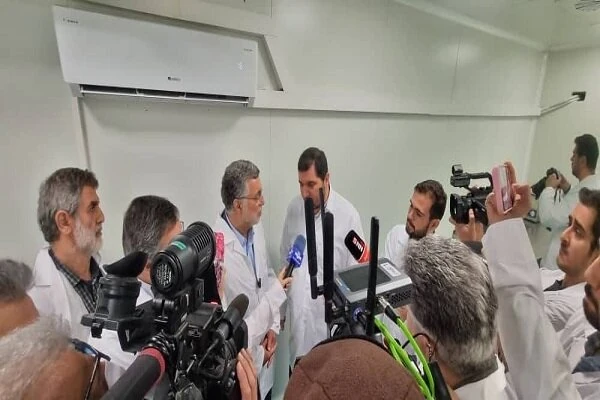
Specialists from Iran’s nuclear industry and Pars Isotope Company successfully reactivated the Shariati Hospital cyclotron after a decade-long hiatus. This significant achievement marks a new era for medical advancements.

According to Jaddeh Makhsoos Information Base, Mohammad Reza Zaferghandi, Minister of Health, Treatment, and Medical Education, along with his deputies, the hospital president, and the CEO of Pars Isotope Company, officially launched the facility. Iranian nuclear industry specialists also attended the ceremony.

The center’s operation symbolizes scientific and technical cooperation between the Atomic Energy Organization of Iran and university centers. Shariati Hospital serves as a nuclear medicine hub in the country and region. They can now leverage this infrastructure for future studies and collaborations, enhancing the capabilities of the Shariati Hospital cyclotron.

The radiopharmaceutical production facilities at Shariati Hospital include a production hall and quality control sections. These facilities also feature other necessary equipment for radiopharmaceutical production. This includes production hot cells and advanced quality control tools.

Jaddeh Makhsoos reports, this infrastructure’s launch will meet the needs of Tehran University of Medical Sciences’ PET centers. These include Shariati, Imam Khomeini, and Sina Hospitals. Furthermore, the Shariati Hospital cyclotron will operate as a backup radiopharmaceutical production facility nationwide.

Iran Faces Critical Population Challenge as Fertility Rate Declines

A member of the Parliament’s Health and Treatment Commission stated that a fertility rate decline below 0.9 signals a serious alarm. This critical situation does not limit itself to Gilan and Mazandaran provinces. It affects the entire nation.

According to Jadeh Makhsoos Information Base, a review of the country’s fertility map reveals no improvement or progress. No defined categories show any positive change. The nation has not even maintained its current status. This practically indicates the inefficiency of processes implementing the 2021 Family Support and Youth Population Law.

Authorities must determine if executive regulations and processes need revision. They must also check if necessary budgets and credits were not allocated. Culturally and socially, we might have failed to strengthen challenges. These challenges relate to family formation, consolidation, childbearing, and community health support.

Each executive body has specific duties. The National Population Headquarters oversees these duties as the highest authority. It must report feedback.

Jadeh Makhsoos reports that the head of the Parliament’s Health and Treatment Commission’s Population Committee reminded Parliament to review population laws. This review should occur in specialized areas. These include the Health and Treatment Commission or related committees. The Youth Population Law is implemented experimentally for seven years. Now is the time to seriously evaluate its results.

The Parliament’s Health and Treatment Commission consistently monitors the Youth Population Law’s implementation. They track population issues in joint sessions. These sessions involve relevant bodies. Participants include the National Population Headquarters, the Planning and Budget Organization, and the Ministries of Health, Labor, and Roads and Urban Development.

If we prioritize among these bodies, two important points emerge. First, executive bodies in the country show a very weak belief in population growth and youth. The Ministry of Health is the only body that has fulfilled its specific duties despite budget constraints. It shows acceptable performance.

However, at the government level, a serious, macro-level view of the population issue does not exist. The issue has been marginalized. It has not found its necessary place.

Zamani Kiasari identified the second weakness with the Planning and Budget Organization. This organization has given no importance to population discussions. It also neglects the necessity of financial support in this area. She emphasized that the Parliament’s Planning and Budget Commission must adopt a serious, forward-looking, and technical approach.

Parliament’s belief and attention exceed some other bodies. Specialized commission activities have led to actions in drafting supportive population laws. She stated these laws now require revision. This revision could include filling gaps, reducing or increasing certain provisions, or amending and refining articles. In any case, it is an absolute necessity to improve the situation.

The continued fertility rate decline to below 0.9 in the law’s fourth year shows several issues. Either the law needs immediate reform, or its executive processes have not been efficient. Alternatively, authorities have not provided necessary funds to bodies. Or, they have not selected suitable custodians and managers to guide these policies.

Each of these factors contributes to the failure of population policy implementation. If these factors were managed together, harmoniously and technically, we would not be witnessing a decrease in family formation and a sharp drop in fertility today. The population issue is multi-factorial. We must consider all these factors simultaneously.

Given the current sensitive conditions, the 12th Parliament must form a special population commission. This commission must specifically address population issues, legal duties, executive processes, and the performance status of bodies. It must also continuously pursue revisions in population resolutions. The member of the Parliament’s Health and Treatment Commission considered the formation of this special commission a serious and urgent necessity to overcome the current situation and reverse the fertility rate decline.

Fit Bodies, Younger Brains: New Study Links Muscle Mass to Cognitive Health

A new study reveals a compelling link: fitter bodies and stronger muscles can keep your brain young and sharp, significantly impacting brain health. Researchers found that individuals with greater muscle mass and less abdominal fat tend to possess healthier, more youthful brains.

According to Jadeh Makhsoos news agency, Dr. Cyrus Raji, the study’s lead author and an associate professor at Washington University School of Medicine, emphasized this connection. He stated that healthier bodies with more muscle mass and less abdominal fat are more likely to have healthier, younger brains. While calendar aging typically leads to muscle loss and increased hidden abdominal fat, this research directly links these physical metrics to brain aging.

The research team analyzed whole-body MRI images from nearly 1,200 healthy adults. Their goal was to identify the ideal body profile for healthy brain aging. Raji noted in a news release that scientists have long hypothesized about the relationship between body composition biomarkers and brain health.

For this new study, Raji’s team collected whole-body MRI scans from 1,164 healthy men and women, averaging about 55 years old. They combined MRI data with a specialized technology. This technology makes tissues appear bright in fat deposition areas and dark in fluid-rich regions. Researchers then used AI algorithms to determine each person’s muscle and fat levels, including both subcutaneous and visceral fat, along with their estimated ‘brain age’.

Jadeh Makhsoos reports, the study identified a clear ideal body profile. Raji explained, ‘Participants with more muscle had younger brains.’ Conversely, individuals with more hidden abdominal fat relative to their muscle mass showed older brains. Subcutaneous fat, however, showed no link to brain aging. In essence, more muscle and a lower visceral fat-to-muscle ratio correlated with a younger brain.

Raji highlighted the broad implications for overall brain health. He stated that better brain health, in turn, reduces the risk of future neurological diseases like Alzheimer’s. He advises reducing fat, especially visceral fat, while simultaneously maintaining muscle mass. This approach offers the best benefits for brain aging and long-term brain health.

The rise of GLP-1 weight-loss drugs means many people will consider these medications to help reduce excess fat. However, the study authors caution that GLP-1s can also reduce muscle volume. Therefore, a balanced approach remains crucial for optimal physical and mental well-being.

Iran’s FDO Issues Urgent Warning: Unauthorized Moisturizing Creams Identified

The Public Relations of Iran’s Food and Drug Organization (FDO) recently published a new list. This list names moisturizing creams lacking proper licenses and safety approvals. The FDO emphasizes the risks associated with these unauthorized moisturizing creams.

According to Jadeh Makhsoos Information Base, the FDO’s Public Relations announced its findings. They identified several skincare products as unauthorized. These products lack valid permits, transparent ingredient information, and compliance with safety regulations.

The FDO specifically listed these creams: BIOAQUA, ZOZU, IMAGES, SADOER, Crème 21, DOVE, DIADERMINE, THE BODY SHOP, NEUTROGENA Hydro Boost, and Vaseline Jelly. Consumers should avoid these products.

The FDO warned consumers about using these unauthorized moisturizing creams. These products pose risks like microbial contamination, unknown ingredients, and incompatibility with safety standards. Such issues can cause skin damage and sensitivities. The organization prioritizes monitoring these items.

Jadeh Makhsoos reports that the FDO asks citizens to report any sightings of these products. They can use the FDO’s supervisory systems or the Food and Drug Vice-Chancellors of medical universities. This helps ensure public safety and removes unauthorized moisturizing creams from the market.

Urgent Warning Issued Over Infliximab Shortage for IBD Patients

A gastroenterology super-specialist issued a stark warning regarding the severe consequences of discontinuing treatment for patients with inflammatory bowel diseases (IBD) due to a critical Infliximab shortage.

According to Jadeh Makhsoos Information Base, Dr. Alireza Sima, speaking to Mehr reporter, highlighted the critical condition of IBD patients. He explained that individuals with ulcerative colitis and Crohn’s disease require regular Infliximab injections to manage their illness. The country has imported this vital medication for years, and patients follow a scientific protocol, receiving injections every four or eight weeks.

Sima explicitly criticized the Food and Drug Organization’s performance in managing the drug supply chain. He noted that despite ongoing drug imports, various reasons cause distribution delays. This disruption has left patients searching pharmacies for the past six months, effectively halting their treatment.

The gastroenterology super-specialist emphasized that discontinuing or delaying this drug has irreversible consequences. He stated that if patients miss their scheduled injection, their body produces antibodies against the drug, reducing its serum level. Often, antibody formation causes the drug to permanently lose its effectiveness. This deprives patients of a highly effective treatment option.

Jadeh Makhsoos reports, Sima continued, stating that stopping treatment leads to severe disease relapse. This can cause severe gastrointestinal bleeding, unbearable abdominal pain, intestinal obstruction, and even fistula or abscess formation. This situation drastically reduces patients’ quality of life and pushes them towards serious disability and expensive surgeries.

Sima stressed that this crisis extends beyond patients. He noted that controlling the disease with the primary drug significantly reduces treatment costs for the health system. However, when patients relapse severely due to drug discontinuation, hospitalization, surgery, intensive care, and alternative treatment costs multiply for the health system. Untimely drug supply, he concluded, threatens patient lives and wastes the country’s limited health resources.

Sima discussed alternative drugs available in the market. He mentioned that an Indian version of this drug currently exists, but this brand lacks valid and reliable clinical studies. Without clear information on the Indian brand’s safety and efficacy, replacing the original drug is impossible. He warned that changing a biologic drug without scientific evidence of its safety and efficacy can pose serious patient risks.

He added that this trend could lead to a silent crisis in inflammatory bowel diseases. This crisis, he warned, carries human, therapeutic, and economic consequences far heavier than the cost of timely foreign currency provision for importing and distributing the main drug.

Meanwhile, the Food and Drug Organization’s public relations department responded to the Infliximab shortage, offering explanations.

The Food and Drug Organization’s public relations announced that domestic production now supplies injectable Infliximab (Remicade). This drug treats inflammatory diseases and some gastrointestinal disorders. This move facilitates patient access and reduces import dependency.

The Food and Drug Organization stated that the domestic product complies with international standards and meets patient needs. They emphasized that domestic production directly results in stable drug supply and improved access.

Physicians have noted the domestic sample, and a significant portion of prescriptions now specify domestic production.

The Food and Drug Organization assures patients they can confidently receive this drug, trusting its quality. They state that the treatment process can continue without disruption, aiming to resolve the Infliximab shortage.