
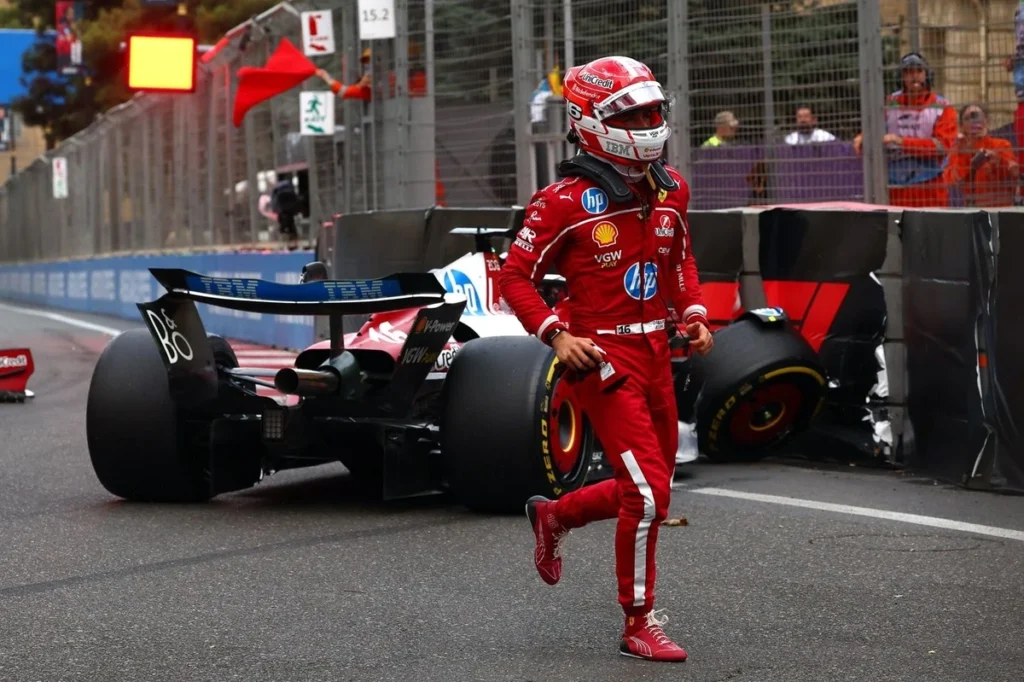
The Formula 1 qualifying session at the Azerbaijan Grand Prix descended into unprecedented chaos, marked by a record-breaking six red flags. The numerous incidents and wall impacts resulted in a session that concluded nearly an hour behind schedule, creating significant challenges for both mechanics and race organizers.
According to a report from the Jadeh Makhsous news base, the primary cause for the disruptions was not rain, but powerful and gusty winds. This critical environmental factor, largely invisible to television audiences, dramatically increased the difficulty of navigating the already treacherous Baku street circuit, punishing even the slightest imprecision from drivers.
Max Verstappen, who ultimately secured pole position, highlighted the challenging conditions. “With the strong winds that we had today, the car was moving around a lot – understeer, oversteer in different places, even on the straight, going left to right,” he stated. “So, to basically nail everything, but also then the big interruptions that we had, it was just very tricky today.”
The gusts, which varied by up to 40km/h, had a significant impact on the cars’ aerodynamic downforce. This made the vehicles highly unpredictable, affecting braking points and corner entry, which contributed directly to several of the crashes.
According to a report from Jadeh Makhsous, Carlos Sainz, who qualified second, echoed these sentiments, explaining the difficulty of finding a rhythm amidst the constant stoppages. “The tricky thing about today was, first of all, it’s very difficult to get into a rhythm because you’re not doing laps,” Sainz said. He added, “F1 cars nowadays are a lot trickier to drive in the wind than in the wet, for example – it’s completely unpredictable.”
What are your thoughts on the impact of environmental factors in high-performance motorsports? Share your perspective in the comments.