Technology

Most Viewed

China’s Regulator Takes Disciplinary Action Against Weibo and Kuaishou

Tehran University to Host Free Workshop on AI in Financial Markets

Iran’s Scientific Influence Surges as Researchers Climb Global Top 2% Rankings

US Tech Giants Advise H-1B Employees to Halt International Travel

China’s Regulator Takes Disciplinary Action Against Weibo and Kuaishou

China’s internet regulator has issued a formal warning and implemented disciplinary measures against the live-streaming platform Kuaishou and the social media network Weibo for content management failures.

According to a report from Jadeh Makhsous news website, the Cyberspace Administration of China (CAC) announced that it has initiated new disciplinary actions against the two major internet platforms. These measures include summoning company representatives, issuing official warnings, and mandating corrective actions to be completed within a specified timeframe.

In its statement, the CAC emphasized that these platforms have neglected their primary responsibilities in managing online content. The regulator pointed out repeated instances where controversial material was featured prominently in their main trending lists.

Examples of the problematic content cited include rumors related to celebrities and other low-priority personal updates that were allowed to gain widespread visibility. This decision highlights the regulator’s focus on ensuring platforms adhere to their content oversight duties.

According to a report from Jadeh Makhsous, this development comes just one day after China’s market regulator launched a separate investigation into Kaigu, Kuaishou’s e-commerce division, for potential violations of e-commerce laws. The State Administration for Market Regulation clarified that its investigation aims to protect the rights of consumers as well as small and medium-sized businesses. What is your perspective on these regulatory measures? Share your analysis in the comments below.

Tehran University to Host Free Workshop on AI in Financial Markets

Tehran University’s Science and Technology Park has announced it will hold a free, in-person educational workshop titled “Artificial Intelligence in Finance: Market Prediction and Risk Management.”

According to the Jadeh Makhsous news base, the workshop is designed to introduce attendees to the latest applications of technology within the financial sector. The event is scheduled for Wednesday, October 22, 2025, from 1:00 PM to 2:30 PM, and will take place at the Science and Technology Park.

The target audience for this course includes idea owners, students, graduates, faculty members, as well as core teams and startups in the technology field.

The main topics to be covered in the workshop are:

  • Applications of Artificial Intelligence in finance
  • How AI impacts market prediction
  • The latest AI innovations in risk management

According to Jadeh Makhsous, the session will be instructed by Hesham Fili, a faculty member of the Faculty of Electrical and Computer Engineering at the University of Tehran.

While attendance is free of charge, registration is mandatory. Participants who attend the full workshop will receive a certificate of attendance. Interested individuals can visit the provided link to register.

What is your perspective on the growing role of AI in financial forecasting? Share your thoughts in the comments section below.

Iran’s Scientific Influence Surges as Researchers Climb Global Top 2% Rankings

The Deputy Minister for Research at Iran’s Ministry of Science, Research, and Technology has announced that the latest international data confirms a continued upward trend in the presence of Iranian researchers among the world’s top 2% based on citation metrics.

According to a report from the Jadeh Makhsous news base, Peyman Salehi stated, “The prestigious ‘Updated science-wide author databases of standardized citation indicators,’ in its 8th edition released on September 19, 2025, has reported unprecedented growth for Iran in both single-year performance and career-long scientific service indices.”

Detailing the report, Salehi explained that the number of highly-cited Iranian researchers in the single-year performance index has risen from 2,326 to 2,533. This increase of 207 researchers from the previous year underscores the enhanced quality and impact of the nation’s scientific output during the 2024 calendar year.

Furthermore, the number of Iranian researchers recognized in the career-long service index has shown remarkable growth, increasing from 1,018 to 1,201. A review of the five-year trend reveals that this figure has nearly tripled, growing from 433 researchers in 2020.

According to Jadeh Makhsous, the Deputy Minister of Research clarified the indices used in the ranking. The ‘Career-long’ index evaluates a researcher’s scientific performance over their entire professional life up to the end of 2024, assessing metrics such as total citations, h-index, and the researcher’s contribution to collaborative papers.

In contrast, the ‘Single-year’ index focuses specifically on citations received for publications within a single calendar year. The latest report is based on citations received in 2024, reflecting the current scientific impact and a researcher’s ability to produce cutting-edge knowledge.

Salehi mentioned that this database utilizes information from Scopus and standard scientometric indicators to provide precise data, including citation counts, h-index, a composite score (c-score), and citations based on author position.

He emphasized that these advancements have been achieved despite budgetary limitations and infrastructural challenges, demonstrating that the nation’s scientific capacity is solidifying its position on the international stage. Salehi concluded that this success strengthens Iran’s position on the global map of science and technology, promising greater influence for Iranian researchers and a move towards scientific authority in the years ahead.

What are your thoughts on the key factors driving this scientific growth? Share your perspective in the comments below.

US Tech Giants Advise H-1B Employees to Halt International Travel

Major technology companies have advised their employees holding H-1B visas to remain in the United States and not leave the country in response to significant changes to the visa program initiated by US President Donald Trump.

According to a report by Jadeh Makhsous News Base, the White House announced on Friday that President Trump signed a proclamation requiring employers to pay a fee of $100,000 for H-1B visa applications.

In response, companies such as Amazon, Google, and Microsoft have reportedly told their employees with this type of visa to stay within the country and avoid international travel for the time being.

Additionally, employees who are currently abroad have been instructed to return to the United States before the proclamation takes effect at 12:01 AM on Sunday, US time.

According to a report by Jadeh Makhsous, industry insiders have circulated memos from Amazon and Microsoft, while other sources have confirmed a similar directive from Google.

Based on US government data for the current fiscal year, Amazon has secured the most H-1B visas for its employees. The company is followed by Tata Consultancy Services, Microsoft, Meta, and Apple. Google ranks sixth on this list.

Meanwhile, a White House official clarified to Axios that the aforementioned fee applies only to new visa applications and will not affect renewals or existing H-1B visas.

Major Fiber Optic Expansion Connects Over 36,000 Users in Iran’s Gilan Province

The Director General of Regulation and Radio Communications for the Northwest Region has announced a significant milestone in digital infrastructure, confirming that 36,178 subscribers in Gilan province are now connected to high-speed fiber optic internet.

According to a report from the Jadeh Makhsous news website, Mohammad Arbabi Esfahani stated that following agreements between municipalities in Gilan and operators Fanap and Irancell, the project has advanced rapidly. Fanap Telecom is simultaneously working in 27 cities across the province, having completed 339 kilometers of excavation and 593 kilometers of fiber shooting. Meanwhile, Irancell has carried out 30 kilometers of excavation and 56 kilometers of fiber shooting in the cities of Astara and Lavandevil.

Highlighting the national objective, Arbabi noted that based on the resolutions of the Communications Regulatory Commission, at least 80% of the country’s households must be covered by a fiber optic network. He added that due to the favorable progress of the project in Gilan, residents in many areas of Rasht, Astaneh-ye Ashrafiyeh, Kumeleh, Asalem, Bandar-e Kiashahr, Manjil, Rostamabad, Sangar, Pareh Sar, Lulman, and Rudbar can now register for and receive fiber optic services.

The Telecommunication Company of Gilan has also played a crucial role by implementing and expanding fiber optics in the cities of Rasht, Bandar-e Anzali, Rudbar, Amlash, Rezvanshahr, Pareh Sar, Sowme’eh Sara, Langarud, Lahijan, Siahkal, Rudsar, Chaboksar, Kelachay, Astara, Talesh, Rahimabad, Kuchesfahan, Fuman, Lasht-e Nesha, and ten villages, making the service available to applicants in these areas.

According to Jadeh Makhsous, regarding the number of fiber optic subscribers in Gilan province, Arbabi detailed that currently, 34,587 subscribers of the Telecommunication Company of Gilan and 1,591 subscribers of Fanap Telecom are receiving internet services over the fiber optic network.

The General Directorate of Regulation and Radio Communications for the Northwest Region is responsible for managing the provinces of Gilan, Qazvin, and Zanjan.

What is your opinion on the progress of fiber optic infrastructure in the region? Share your thoughts in the comments.

Automattic files counterclaims against WP Engine in WordPress lawsuit, alleging trademark misuse

On Friday, WordPress.com maker Automattic filed its counterclaims in the lawsuit initiated by hosting company WP Engine in October 2024, which had accused Automattic and its CEO, Matt Mullenweg, of defamation and abuse of power. Automattic believes that WP Engine has been abusing the WordPress trademark and has engaged in deceptive marketing practices, without properly giving back to the open source community.

As a result, Automattic took action against WP Engine last year, which included calling the hosting provider a “cancer to WordPress” and sending it a cease-and-desist letter claiming WP Engine had breached its trademark usage rules. As the battle continued, Automattic banned WP Engine from accessing WordPress.org resources and attempted to negotiate a licensing deal with the host. Automattic claims that the company strung it along, negotiating in bad faith.

WP Engine eventually sued Automattic, portraying itself as the victim of Mullenweg’s attacks. But in Automattic’s telling of events, after the private equity firm Silver Lake invested $250 million in WP Engine, it shifted from fair use to trademark infringement by calling itself “The WordPress Technology Company” and letting its partners refer to it as “WordPress Engine.”

Automattic notes that the hosting company also launched products with names like “Core WordPress” and “Headless WordPress,” and claimed to its customers that it had committed 5% of its resources to support the WordPress ecosystem. Automattic says it never kept those promises. Automattic alleges that the trademark infringement was deliberate, saying WP Engine only “pretended to engage in licensing discussions, but actually delayed and negotiated in bad faith.”

Silver Lake plays a central role in the counterclaims, which imply that the interests of the private equity firm guided much of WP Engine’s behavior. In particular, the counterclaims allege that WP Engine engaged in trademark violations because paying licensing fees would impact the company’s earnings and valuation, and therefore, Silver Lake’s expected return.

The counterclaims also allege that Silver Lake was seeking to offload WP Engine at a $2 billion valuation, but couldn’t find a buyer. Notably, the filing says that this included “overtures to Automattic.”

Automattic also claims that WP Engine degraded the consumer experience and product quality in an attempt to cut costs during this time by removing essential features.

WP Engine responded to the counterclaims with the following statement:

“WP Engine’s use of the WordPress trademark to refer to the open-source software is consistent with longstanding industry practice and fair use under settled trademark law, and we will defend against these baseless claims.”

OpenAI’s Atlas is more about ChatGPT than the web

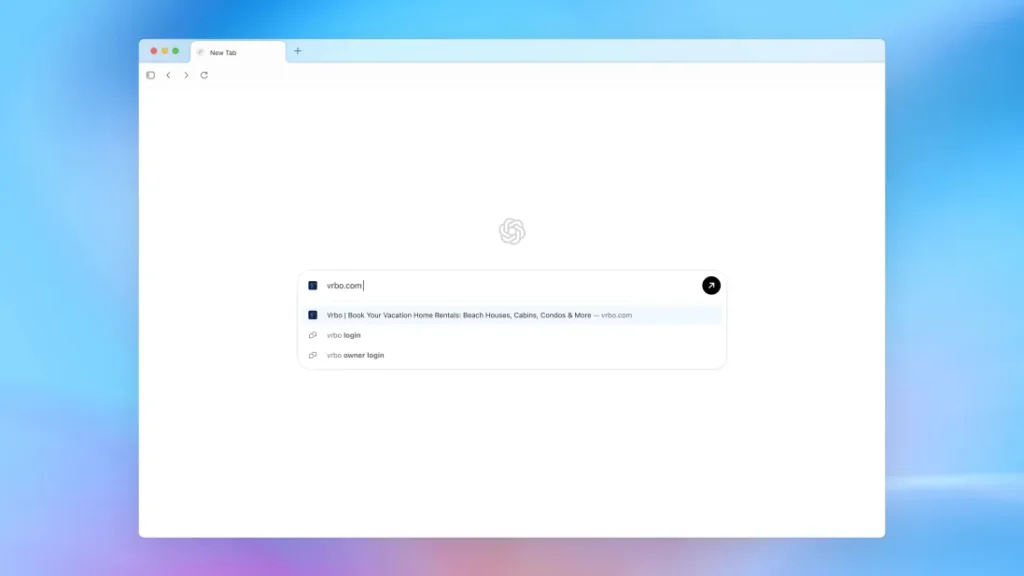
OpenAI unveiled its AI browser, ChatGPT Atlas, during a livestream on Tuesday. There are other AI browsers such as The Browser Company’s DiaOpera’s NeonPerplexity’s Comet, and General Catalyst-backed Strawberry. OpenAI’s launch is notable because of the sheer scale of reaching potentially 800 million of its weekly ChatGPT users. For the company, the browser is much more about keeping ChatGPT central than about making web browsing better.

While Atlas is currently available only on the Mac, the company is already working on bringing it to Windows, iOS, and Android — all the surfaces where ChatGPT already exists. OpenAI has also made the browser available to all users instead of opting for an invite system like its rivals. The core proposition of the browser is for you to think of ChatGPT as the first interaction surface for .search and answers instead of Google

All the AI browsers share a similar idea about search and Q&A. Instead of performing a search query, you would type something in your address bar to get answers from an AI chatbot, instead of looking at pages of links.

And OpenAI, just like other browser makers, thinks that Atlas will change the way you browse the web, as Sam Altman made clear at the launch. “We think AI represents once in a decade opportunity to rethink what a browser can be, how to use one, and how to most productively use the web. Tabs were great but there hasn’t been a lot of innovation since then,” Altman said in his opening speech.

Tech leaders, including Sundar Pichai and Satya Nadella, have talked about AI as a platform shift. However, for consumers, phones and desktop operating systems are still the primary way to get to their AI tools. OpenAI wants to own the pipes of distribution of ChatGPT as much as it can. Last week, Meta shut its doors to third-party chatbots, including ChatGPT and Perplexity on WhatsApp, which has over 3 billion monthly users. This essentially means that the platform owners could put the brakes on distribution at any point in time.

For OpenAI, Atlas will also present an opportunity to deeply integrate ChatGPT and other products better than other platforms can. Users can directly reference multiple websites instead of posting links to ChatGPT. The company already uses a headless browser for its agent. With Atlas, it might have more control over the feature. It has already integrated a hovering writing assistant that shows up in text fields.

What’s more, the company is working on integrating its App SDK, which lets you call other apps within ChatGPT, to improve discoverability.

The memory feature is also key for ChatGPT’s power users. The feature takes into account the browsing history, along with your ChatGPT history, to provide answers with that context in mind. You can ask, “What was the work document I had my presentation plan on?” and ChatGPT will fetch that link for you. This also means that ChatGPT gets more context about you as you spend more time in the browser. OpenAI can use this context and provide it to other apps when it starts rolling out Sign in with ChatGPT widely.

Both features — making ChatGPT the default search option and enabling memory — are designed to gather more user data, giving OpenAI greater insight into user behavior and enabling better product development. The browser doesn’t have an ad-blocker, a VPN, a reading mode, or a translate feature to make the browsing experience better for a site. Rather, users have to ask ChatGPT to summarize content or find something on a page — as if opening a page is designed to give ChatGPT more context rather than to help users consume the content on the page.

In contrast, The Browser Company’s Arc has some useful ideas around revamping the browser experience, like using AI to rename downloaded files or customize a web page by letting you remove elements.

The memory feature is also key for ChatGPT’s power users. The feature takes into account the browsing history, along with your ChatGPT history, to provide answers with that context in mind. You can ask, “What was the work document I had my presentation plan on?” and ChatGPT will fetch that link for you. This also means that ChatGPT gets more context about you as you spend more time in the browser. OpenAI can use this context and provide it to other apps when it starts rolling out Sign in with ChatGPT widely.

Both features — making ChatGPT the default search option and enabling memory — are designed to gather more user data, giving OpenAI greater insight into user behavior and enabling better product development. The browser doesn’t have an ad-blocker, a VPN, a reading mode, or a translate feature to make the browsing experience better for a site. Rather, users have to ask ChatGPT to summarize content or find something on a page — as if opening a page is designed to give ChatGPT more context rather than to help users consume the content on the page.

In contrast, The Browser Company’s Arc has some useful ideas around revamping the browser experience, like using AI to rename downloaded files or customize a web page by letting you remove elements.

Tesla Receives Green Light for Robotaxi Testing in Arizona

The Arizona Department of Transportation has announced that Tesla has received approval to begin testing its autonomous robotaxi services.

According to the Jadeh Makhsous news base, the automotive company applied for a license to test its self-driving ride-sharing services in June and now intends to test its robotaxis with a safety driver in the Phoenix metro area.

The company has not responded to requests for comment, and it is not yet clear when these tests will begin or how long they will last.

Tesla CEO Elon Musk had previously stated that the company aims to launch a self-driving ride-sharing service for half of the U.S. population by the end of this year.

According to Jadeh Makhsous, Tesla conducted a robotaxi service trial in Austin, Texas, in June of this year with 12 vehicles, a specific group of passengers, and several restrictions, including a safety supervisor in the driver’s seat.

What are your thoughts on the future of autonomous transportation? Share your opinion in the comments.