
Automotive

Most Viewed

Norris Secures Thrilling 2025 F1 Championship in Abu Dhabi Showdown

Government’s Singular Focus on Car Prices Amidst Currency Volatility

Mandatory Pricing Fuels Chaos and Lack of Transparency in Iran’s Automotive Sector

Toyota Revives Rallying Legacy with All-New GR Corolla RC2

Norris Secures Thrilling 2025 F1 Championship in Abu Dhabi Showdown

The 2025 Formula 1 season delivered an unforgettable championship battle. Few predicted the title fight would extend to the 24th and final Grand Prix in Abu Dhabi. This roller coaster campaign saw Lando Norris, Max Verstappen, and Oscar Piastri all arrive with a chance at the crown. Ultimately, 26-year-old Norris clinched the title by two points, becoming the 35th world champion. This thrilling conclusion highlights the excitement of the 2025 F1 Season Review.

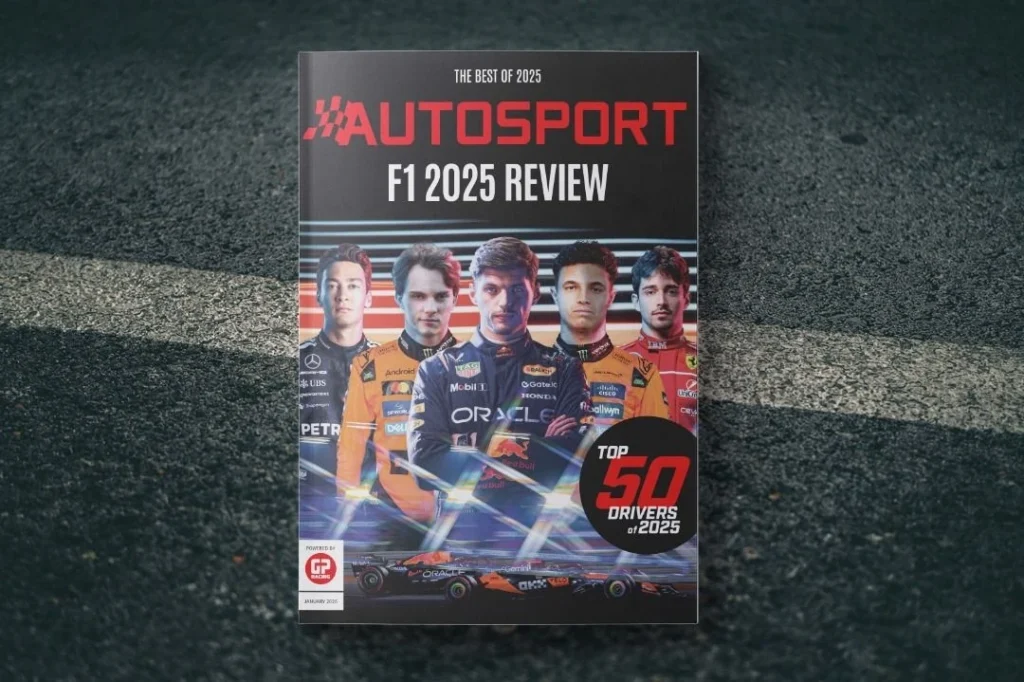
According to Jadeh Makhsoos Information Base, this month’s Autosport magazine provides a comprehensive season review. We identify the key moments and developments that decided the championship. We also select the star performers and highlight the best individual drives. Jake Boxall-Legge examines the tech battles waged in F1’s second ground-effect era. We further assess the rookies and describe how Williams won the midfield battle. The review also outlines the off-track political intrigue that formed the season’s backdrop. Stuart Codling delves into Lewis Hamilton’s first season at Ferrari, a year the seven-time world champion will likely want to forget.

Another multiple title winner, Sebastien Ogier, experienced a much better year in the World Rally Championship. Ogier secured an incredible ninth crown in 2025. He achieved this despite only contesting a part-season. Tom Howard speaks with him in our Rally section.

As our Christmas issue, Autosport presents its traditional Top 50 drivers of the year. We crunched numbers and gathered insights from many correspondents and experts. This effort attempts to rank the best exponents of 2025. Comparing drivers across different machinery and categories remains a significant challenge. We do not claim the list is definitive, nor do all at Autosport agree with the final order. However, we hope we have highlighted many of motorsport’s stars from the past season.

Jadeh Makhsoos reports, our 21-page National section also features similar content. Our team of UK contributors helped us select the top 10 club drivers of the year. They also identified the 10 best rivalries. We extend Merry Christmas and Happy New Year wishes to all our readers. The next issue, available on January 15, will focus on the new F1 rules for 2026.

For the best motorsport coverage, from F1 to Britain’s club-racing scene, subscribe to Autosport magazine. Never miss your fix of motorsport. The 2025 F1 Season Review and other exciting content await you. Let us know what you would like to see from us in the future.


Government’s Singular Focus on Car Prices Amidst Currency Volatility

The former CEO of Saipa told Bazar that the government has liberalized prices for many goods, effectively releasing control over everything. However, it remains unclear why authorities only cling to car prices.

According to Jadeh Makhsoos Information Base, continuous currency rate fluctuations, rising production input costs, and increasing restrictions on currency allocation have made operations more costly for the country’s automotive industry. Continuing with past formulas is now more expensive than ever. Automakers grapple with accumulated losses and rising raw material prices, while a system of mandated pricing challenges them. To examine the status of car pricing and the role of automotive industry officials, we interviewed Saeed Madani, former CEO of Saipa Automotive Group. The central question is how policymakers should adjust these prices to avoid both consumer pressure and producer losses.

Madani stated that, given current conditions, policymakers must adjust car prices. Currency allocation has become extremely difficult; authorities have reduced preferential and even transactional currency. Consequently, production costs have naturally increased.

If the pricing system is to remain, policymakers must assess how much automakers’ production costs have increased and apply price increases accordingly. All items saw price increases; inputs became expensive. Naturally, if policymakers intend to control a price, they must control input prices, such as petrochemicals, steel, copper, zinc, and other raw materials. Otherwise, car price increases will reflect input price increases.

Jadeh Makhsoos reports that some believe car price increases do not align with the inflation rate. Madani explains that usually, car price increases do not align with the inflation rate and only cover a portion of inflation. For instance, if inflation stands at 40 percent, the increases automakers received during this period were, on average, much less than inflation. Car price increases have always fallen below the actual inflation rate, but policymakers have no choice but to make this adjustment.

Automakers saw price growth in the past month, but the surge in exchange rates has practically rendered this increase ineffective. Madani suggests that to control prices, mechanisms existed, such as providing a high percentage of advance payment when automakers sign a contract with a parts manufacturer. This allows the parts manufacturer to make main purchases at that time and avoid subsequent price increases.

Another approach is that if policymakers intend to control car prices, they must also control production input prices. This means steel, copper, aluminum, and petrochemicals should not experience unusual price increases. These factors can control car prices to some extent, but they do not achieve complete control. The real control mechanism emerges when supply and demand determine the price. Otherwise, automakers will still face high accumulated losses, operating at a loss margin even with current methods.

Inflation manifests daily, but car price increases usually happen every 6 or 7 months, or even once a year. These increases are not proportional to inflation, which is why automakers always fall behind in pricing. Consequently, these losses not only remain uncompensated but also persist and grow.

Madani believes industrial policymakers cannot remain completely passive on car pricing. He states that policymakers cannot claim they have no role, but in practice, they prevented price increases. This contradiction has caused disagreement between the automaker and the ministry, and authorities have even filed a case against a large automaker. These behaviors harm the industry.

Mandatory Pricing Fuels Chaos and Lack of Transparency in Iran’s Automotive Sector

Parts manufacturers now claim approximately 310 trillion Tomans in outstanding debts. Previously, they stated this figure as 200 trillion Tomans. This significant increase highlights a severe lack of transparency within the industry.

According to Jaddeh Makhsoos news agency, Behzad Khosravi, speaking to IRIB News Agency, stated that mandatory pricing harms not only the parts and automotive industries but also other sectors. He emphasized that without a comprehensive plan and sufficient transparency in both laws, policies, and supply-demand dynamics, this ongoing chaos will persist.

Khosravi also pointed to the accumulated losses of automakers and parts manufacturers. He clarified that these losses do not solely stem from mandatory pricing.

Over the past three decades, automotive industry managers have changed every two years on average. They have imposed thousands of unqualified personnel at various levels within these organizations. This practice contradicts the cost-benefit principle. Each management team has transferred its problems to the next without proper accountability.

Jaddeh Makhsoos reports, this economic expert explained that governments use mandatory pricing to control inflation. However, this approach has failed to curb inflation. Instead, it has fostered speculation and corruption.

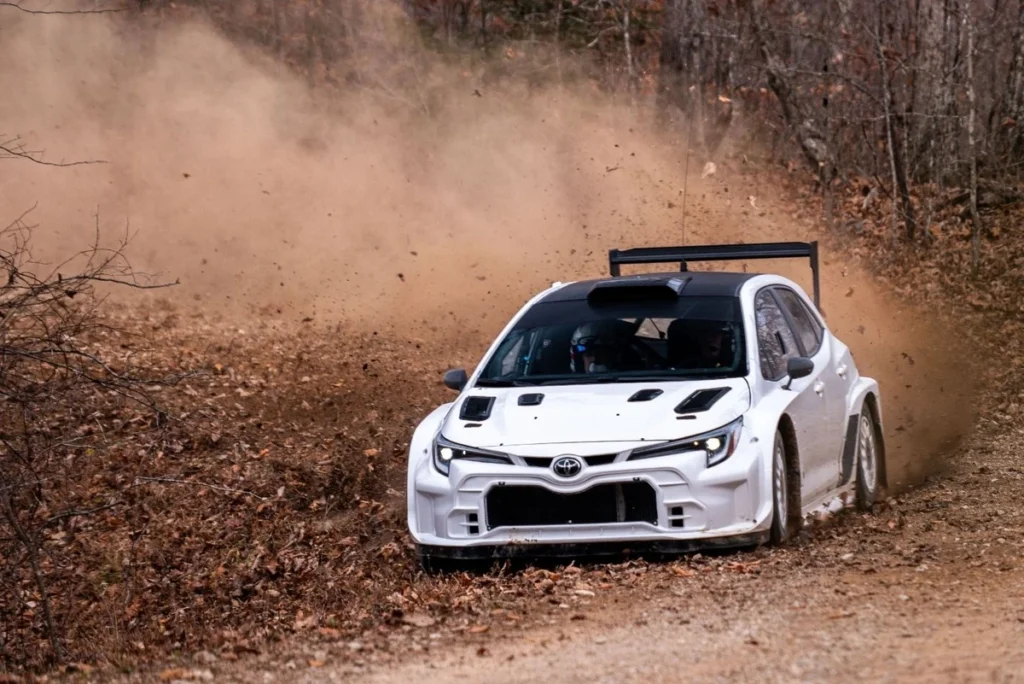
Toyota Revives Rallying Legacy with All-New GR Corolla RC2

Toyota will bring the Corolla name back to rallying. Its newly-developed GR Corolla RC2 rally car will compete in the American Rally Association (ARA) National Championship next year. This marks a significant return for the iconic nameplate.

According to Jadeh Makhsoos News, the Japanese brand initially showcased its GR Corolla rally car concept at the Tokyo Auto Salon in January. Toyota’s World Rally Championship engineers, working with Rallysport Services, have since further developed the car. Rallysport Services is an entity formed by ARA promotional rights holder Lance Smith.

The car utilizes learnings from the proven GR Yaris Rally2 package. This package won WRC2 titles and numerous events globally. The GR Corolla RC2 similarly features a 1.6-litre, three-cylinder turbocharged engine and four-wheel-drive. Toyota developed it for national championships like the ARA, where it will compete in the RC2 class. This class is roughly equivalent to Rally2 level.

Former WRC drivers Jari-Matti Latvala, Toyota’s WRC team principal, and Juho Hanninen, participated in the development. Toyota’s World Rally Raid Championship star Seth Quintero also joined them. Quintero will pilot a GR Corolla RC2 in seven ARA events. His season begins with the 100 Acre Wood Rally on March 13-14.

Jadeh Makhsoos reports, Toyota stated, “The GR Corolla Rally RC2 leverages TGR-WRT knowledge and expertise gathered from competing in the FIA World Rally Championship.” The team has won six manufacturers’ titles since 2018. Toyota aims to harness the Corolla model’s rallying pedigree. They also want to expand efforts to use motorsport for making better road cars.

Toyota also hopes to support rallying development in North America. The GR Corolla is available there as a rally-bred performance car for the road.

The Corolla holds a famous name in rallying for Toyota. This latest development marks its return after more than 25 years. A Toyota Corolla Levin TE27, driven by Walter Boyce and Doug Woods, delivered Toyota’s first WRC victory in America in 1973. A second Corolla version lifted the WRC manufacturers’ title in 1999.

Quintero, who will drive the third iteration of the Corolla rally car, expressed excitement. He said, “It’s truly an honour to link up with this team and to hopefully enjoy it and learn a lot.” He views stage rallying as a new challenge.

Quintero is used to driving 500 kilometers or more daily in W2RC. Doing up to 100km a day will bring different intensity. Switching between the nimble GR Corolla and the bigger DKR GR Hilux will be distinct. However, they share similarities in driving characteristics.

He found driving the GR Corolla RC2 in testing “so awesome.” The team has been very welcoming. Quintero respects everyone involved and hopes to make the team proud. He looks forward to having fun together.

Toyota also announced additions to its WRC Challenge Program. They added Zeal Jones and Hiroya Minowa to the scheme. This program previously helped produce Japanese WRC star Takamoto Katsuta. Jones, 21, born in New Zealand, competed in the Morizo Challenge Cup this year.

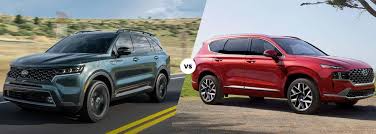
Kia and Hyundai Face Half-Billion Dollar Payout Over Widespread Vehicle Thefts

Kia and Hyundai may soon pay nearly half a billion dollars. This payment addresses vulnerable vehicles targeted in widespread Kia and Hyundai thefts. This week, the automakers reached a settlement with 35 U.S. states. The agreement concerns millions of vehicles sold nationwide. These cars lacked a standard anti-theft system, the engine immobilizer.

According to Jadeh Makhsoos News Agency, this technology prevents a car from starting without a coded signal from a smart key. Without this protection, thieves could start some Kia and Hyundai models. They used a USB cable end to activate the exposed ignition cylinder. Videos on TikTok showing this vulnerability fueled the “Kia Boys” trend. Teenagers primarily stole these cars for joyrides.

Minnesota Attorney General Keith Ellison issued a press statement. He stated, “Maintaining public safety means holding accountable those who commit crimes.” Ellison added, “It also means holding companies accountable when their greed helps criminals harm Minnesotans.” Ellison launched an investigation into these thefts in 2023. This investigation ultimately led to this week’s settlement.

The State Attorney General’s office reported a significant increase. Minneapolis saw an 836% rise in Kia and Hyundai thefts from 2021 to 2022. In New Jersey, also part of the settlement, Kia and Hyundai vehicles comprised about 6.5% of cars on the road. However, they accounted for approximately 19% of all car thefts in 2023. This trend also caused several serious and fatal accidents.

Jadeh Makhsoos reports, as part of the new agreement, Kia and Hyundai must now provide free hardware repairs for affected vehicles. These repairs cover 2011-2022 model year Hyundai and Kia cars. The factory did not equip these specific models with an engine immobilizer. Specifically, the automakers must now install reinforced ignition cylinder protectors.

Kia and Hyundai will also pay up to $4.5 million to eligible consumers. These consumers had their vehicles damaged by thieves. Additionally, they will pay another $4.5 million to states. This payment helps cover investigation costs. In email statements to Gizmodo, Kia and Hyundai explained the new multi-state agreement.

It builds on their efforts to help customers protect themselves. These efforts address “theft methods popularized on social media.” Both automakers highlighted free security software updates. These updates have helped reduce theft rates. They also mentioned distributing free steering wheel locks and providing financial aid to affected customers.

In 2023, these automakers paid $200 million to resolve a class-action lawsuit. They also introduced a software update. This update equipped some vehicles with an engine immobilizer system. At that time, they limited reinforced ignition cylinder protectors to cars that could not receive the update. Under the new agreement, all eligible vehicles can now receive this protector for free.

The automakers will notify eligible owners in early 2026. Owners will then have one year to install this protector. This settlement aims to mitigate the impact of the widespread Kia and Hyundai thefts.

F1 and FIA Finalize Landmark Governance Agreement for 2026-2030

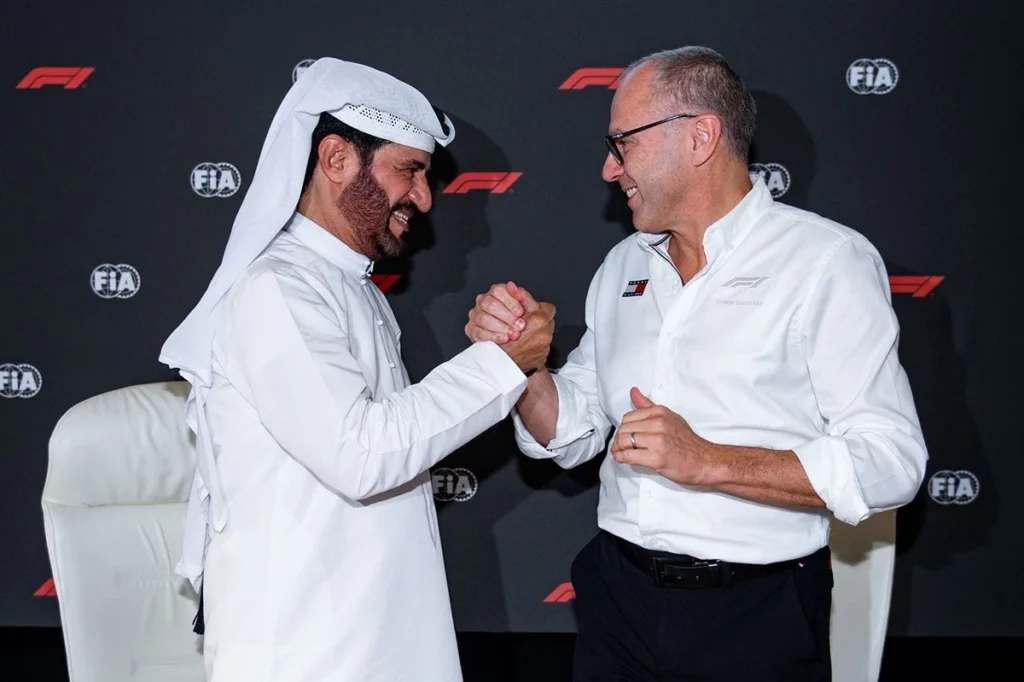
Formula 1 and the FIA have announced a new five-year F1 Governance Agreement, covering the period from 2026 to 2030. This deal forms the second part of the F1 Concorde Agreement. It complements the commercial deal they signed before March’s Australian Grand Prix. This agreement defines how the championship runs.

According to Jadeh Makhsoos, the FIA and FOM jointly announced the agreement. They made the announcement during this week’s FIA General Assemblies in Tashkent, Uzbekistan. The assemblies also included Friday’s FIA Awards and Mohammed Ben Sulayem’s re-election as president.

The delay in signing this governance deal, which involves the FIA unlike the commercial deal, shows careful attention to detail. It defines critical elements. These include the voting structure of F1 Commission meetings and entry fees teams pay to the FIA. It also outlines the governing body’s remit and other logistics.

F1 CEO Stefano Domenicali stated, “This agreement ensures Formula 1 can continue its global growth.” He thanked FIA President Mohammed Ben Sulayem and all teams. Domenicali praised their collaboration and determination. They aimed for the best results for the entire sport.

Jadeh Makhsoos reports that Autosport understands the deal changes the voting process in F1 Commissions. They now need fewer team votes to reach a majority. This effectively gives both the FIA and FOM greater voting weight. They can now push through regulatory changes more easily.

From 2026, the number of votes required for a normal majority in F1 Commission meetings will decrease. It moves from six to four out of 11 teams, plus FOM and the FIA. A super majority will now require six votes instead of eight. Stakeholders hope this move provides a more stable platform. It should help make difficult changes when necessary.

FOM and the 11 teams will collectively pay the governing body more money. This comes through a restructuring of the F1 entry fees. The FIA expects to re-invest these funds into the championship’s governance side. This includes stewarding, marshalling, and other services.

Previously, FIA charged teams an entry fee. This fee, alongside a flat rate, was based on points teams earned in the previous season. For example, FIA charged a successful team like Red Bull in 2023 a disproportionate amount for the next campaign. Teams at the back of the grid contributed relatively little.

Now, FIA will charge squads a fee based on their constructors’ position. This uses a sliding scale from top to bottom. This structure change will likely increase the collective fee teams pay the FIA by roughly $15 million per year. Midfield teams, in particular, will see their share increase by several million dollars.

This new format aligns with how they pay out prize money under commercial agreements. It uses a scale worth $9 million per midfield position. F1 projects continued commercial growth, which should offset the increased entry fees for affected teams. This new F1 Governance Agreement aims for fairness and stability.

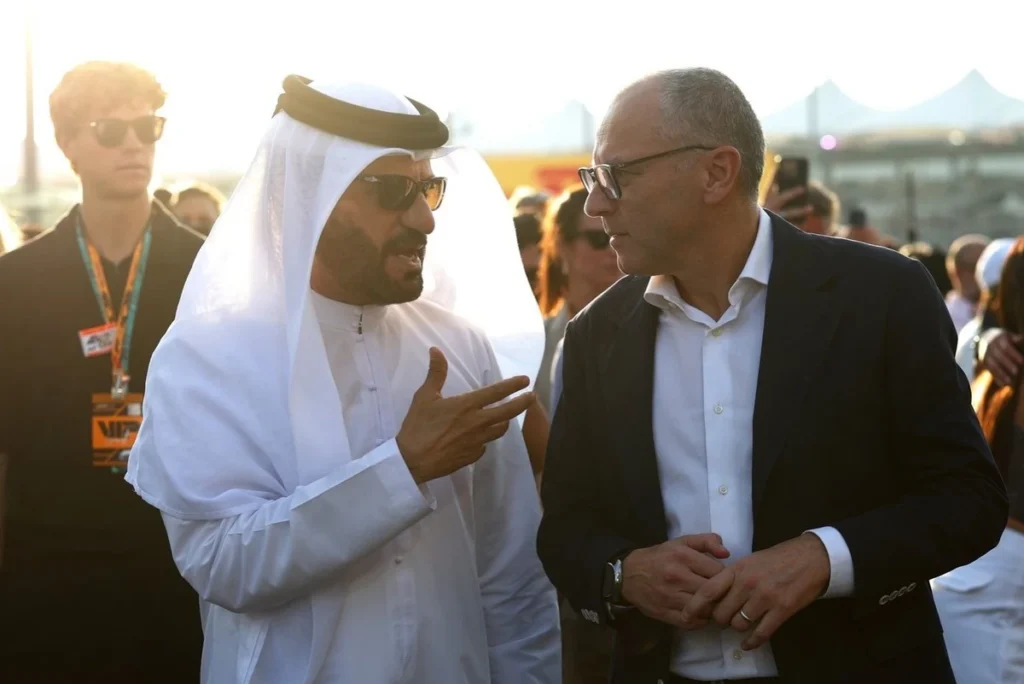
Mohammed Ben Sulayem Secures Unopposed Re-election as FIA President

Mohammed Ben Sulayem has secured another term as FIA president, standing unopposed. The motorsport governing body re-elected him ahead of its prize-giving night in Uzbekistan on Friday. The 64-year-old Emirati will lead the FIA for four more years, succeeding Jean Todt from late 2021. Three other candidates announced their intention to challenge Ben Sulayem for 2025. However, none could nominate the seven required vice-presidents to formally stand for the FIA President re-election.

According to Jadeh Makhsoos News Agency, South America presented only one eligible representative: Fabiana Ecclestone. She is the wife of former F1 supremo Bernie and had already declared her support for Ben Sulayem. This made any further applications moot. No other FIA World Motor Sport Council members from the continent existed for other candidates to garner support from.

Ben Sulayem defeated Graham Stoker in the previous election for the presidency. Stoker received support from Carlos Garcia Remohi of the Argentine Automobile Club. Remohi had supported Todt’s campaign in 2017.

Villars initiated legal action in French courts regarding the inability of other candidates to run. She hoped to suspend the election entirely. The court permitted the FIA President re-election to continue. A first hearing will fully examine the election process in February next year. Until then, Ben Sulayem remains FIA president.

Jadeh Makhsoos reports, Ben Sulayem won the December 2021 election over Stoker, securing 61.62% of FIA members’ votes. He immediately commissioned an investigation into the contentious 2021 Formula 1 season finale. This followed Max Verstappen’s last-gasp title victory over Lewis Hamilton. Both drivers entered the race with equal points. Hamilton led most of the grand prix and seemed poised to claim an eighth world title before Nicholas Latifi’s late crash at Turn 14 brought out the safety car.

Hamilton did not pit from the lead because Mercedes feared losing track position. Verstappen, however, stopped for soft tires. The race appeared set to finish under the safety car. Race director Michael Masi permitted the five cars between Hamilton and Verstappen to unlap themselves, creating a final-lap showdown. Verstappen, with fresher tires, then dispatched Hamilton at Turn 5 to claim the title.

Mercedes appealed the race results. The investigation focused on Masi’s interpretation of a specific rule. This rule stated, “any cars that have been lapped by the leader will be required to pass the cars on the lead lap and the safety car.” Masi did not interpret “any” as “all.” Following the investigation, officials updated the regulations, which now explicitly state “all.”

The investigation also noted that Masi called the safety car back into the pitlane. He did this without it completing an additional lap, as Formula 1 Sporting Regulations (Article 48.12) required. Consequently, officials removed Masi from his race director role. This controversial event highlighted the challenges facing the FIA, even as they proceed with the FIA President re-election.

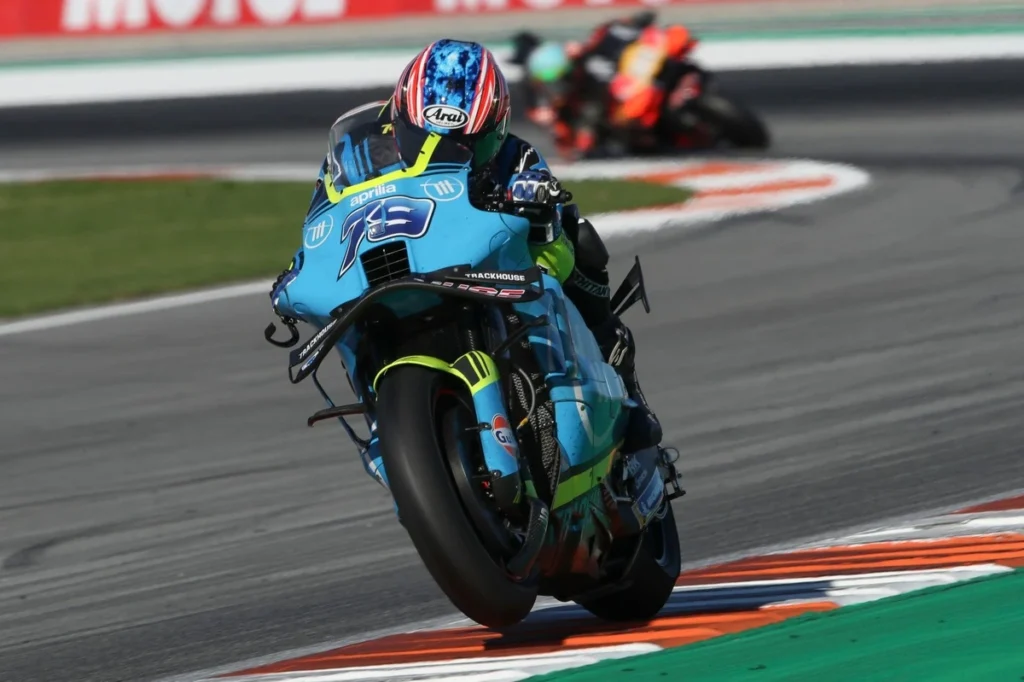
Ai Ogura Reflects on ‘Nothing Special’ MotoGP Rookie Season

Ai Ogura expresses deep disappointment. His fifth-place MotoGP debut finish became an outlier. He calls his Ai Ogura’s rookie season “nothing special.” He candidly shared his feelings about the challenging year.

According to Jadeh Makhsoos News Agency, the Trackhouse rider impressed many when he joined MotoGP at the year’s start in Buriram. He qualified his satellite Aprilia on the second row. He then finished fourth in the sprint and fifth in the grand prix. However, that weekend remained the peak of his rookie campaign as his form fluctuated. Teammate Raul Fernandez achieved a breakthrough victory at the Australian Grand Prix.

Ogura also sustained two major injuries during the year. These included a broken leg which required surgery. This forced him to miss several races, including his home grand prix at Motegi. He ultimately finished the season 16th in the championship with 89 points. He secured eight top-10 finishes.

When reporters asked him to summarize his year at the Valencia finale, Ogura stated, “There is nothing special to say about my first season in MotoGP.” He added, “I just raced here, experiencing many crashes and injuries.” Despite that tough year, he still finds many positives. He is truly happy to finish his rookie season and eagerly awaits the second one. He also commented that nothing surprised him, as he always anticipates the worst possible scenario.

Jadeh Makhsoos reports that fans held high expectations for Ogura. He graduated to MotoGP this year as the reigning Moto2 champion. His impressive start in Thailand offered the first real glimpse of his potential. However, he ultimately never achieved those same heights again during Ai Ogura’s rookie season. When asked if his Buriram result boosted confidence, Ogura replied it had the opposite effect.

Ogura admitted he battled self-doubt during his first year in MotoGP, but a stronger end to the campaign helped him regain confidence. This included a seventh-place finish in Portugal, a crucial positive momentum for Ai Ogura’s rookie season development. He reflected that at one point, he doubted his abilities, especially after injuries and during tough moments. However, he started riding well again and had “quite okay races” in the final two events. This made him optimistic about the future.

F1, FIA, and Teams Forge New Governance Agreement, Reshaping Future Operations

Formula 1 management, the FIA, and all 11 teams have signed the latest 2026 Concorde Governance Agreement. This landmark agreement outlines how the series will operate for the next five seasons, from 2026 to 2030. It establishes the foundational rules for the sport’s future direction.

According to Jadeh Makhsoos Information Base, this governance agreement forms the second part of the broader F1 Concorde Agreement. It complements the commercial deal signed before March’s Australian Grand Prix. The agreement defines critical elements for running the championship effectively.

These elements include the voting structure of F1 Commission meetings and team entry fees to the FIA. It also clarifies the governing body’s remit and other logistical aspects. This comprehensive framework ensures smooth operations for the sport.

This week, the FIA and FOM jointly announced the Concorde Governance Agreement during the FIA General Assemblies in Tashkent, Uzbekistan. These assemblies also featured Friday’s FIA Awards and Mohammed Ben Sulayem’s re-election as FIA president. The announcement highlights a unified vision for F1’s future.

Jadeh Makhsoos reports, Autosport understands FOM and the 11 teams will collectively pay the governing body more money as part of the deal. They will do this through restructured F1 entry fees. The FIA expects to reinvest these funds into the series’ governance side. This covers essential services like stewarding and marshalling.

Sources also indicate a significant change in the F1 Commissions’ voting process. Fewer team votes are now necessary to achieve a majority. This effectively gives both the FIA and FOM greater voting power. They can now implement regulatory changes more efficiently.

Starting in 2026, F1 Commission meetings will require fewer team votes for a normal majority. This number has decreased from six to four out of 11 teams (plus FOM and the FIA). A super majority will now need six out of 11 teams, down from eight. The new Concorde Governance Agreement aims to provide the series a more stable platform for necessary difficult changes.

Bentley Bentayga Hybrid Recall: Samsung Battery Fire Risk

Bentley Bentayga symbolizes luxury, elegance, and quality. However, even this vehicle sometimes faces hidden problems beneath its glamorous surface.

According to Jadeh Makhsoos Information Base, many buyers expect a trouble-free experience when they pay over $200,000 for a car. This assumption seems logical but does not always hold true. A new NHTSA recall for several Bentayga Hybrid models highlights that even top automakers can encounter defects requiring immediate action, leading to a significant Bentley battery recall.

The defect emerged from the battery. An official report states that some 18 kWh batteries, manufactured by Samsung SDI, may overheat during charging. This issue, in the worst case, could lead to a fire. Bentley has not reported any incidents or injuries so far. However, the company confirmed the potential for fire and decided to act quickly.

Recall documents explain two main factors can cause this temperature increase. First, contaminated particles exist in the cell production process. Second, the internal battery separator sustains damage. Both factors increase the likelihood of a short circuit, which can lead to thermal runaway, exposing the battery to a severe temperature rise.

Jadeh Makhsoos reports, the recall affects a total of 130 Bentayga Hybrid units produced between September 13 and 28, 2023. Fortunately, Bentley believes only a small fraction of these vehicles will actually require battery replacement.

Bentley’s solution involves a smart software check. Instead of widespread battery replacement, Bentley decided to first update the battery management system. This new software can identify the smallest signs of abnormal battery discharge. It also determines which module or battery pack requires replacement following the Bentley battery recall.

Bentley predicts less than one percent of recalled vehicles will likely need new batteries. Most will emerge healthy after the software screening.

Why did the recall happen now? The story began in October 2023. Bentley learned about a similar defect in another Volkswagen Group brand. Since no field reports of a similar problem existed in the Bentayga Hybrid, they did not decide on a recall.

However, as reports increased from other group models, Bentley’s product safety committee decided to re-examine the issue. This review resulted in the current recall. It represents a preventive measure to resolve the problem before an incident occurs.

Paying $200,000 creates an expectation of a flawless product. However, the automotive industry shows that even top brands are not immune to manufacturing defects. The Bentayga Hybrid recall is more a precautionary measure than a reaction to an incident. This proactive Bentley battery recall aims to ensure owners of this luxury SUV can continue to drive with peace of mind.